Ukraine drops NATO bid: Will Kyiv get security guarantees from the West?
 15 December 2025
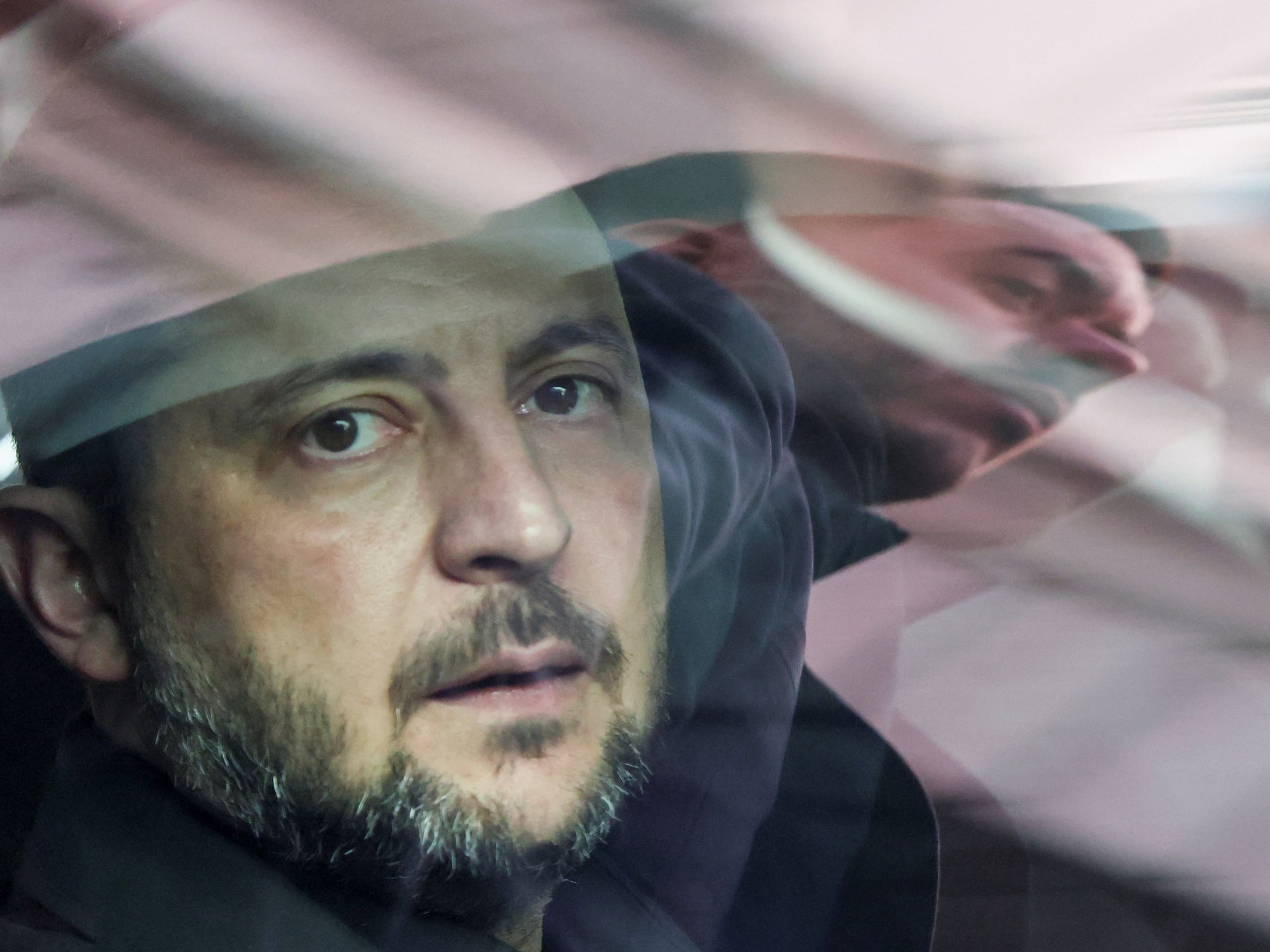

Ukrainian President Volodymyr Zelenskyy has said he is prepared to abandon Ukraine’s pursuit of NATO membership in exchange for tighter Western security guarantees. His comments came as he has been holding talks with United States and European envoys aimed at ending Ukraine’s war with Russia.
US President Donald Trump, who has opposed NATO membership for Ukraine, has been pressuring Kyiv to sign a deal with Russia on terms that experts say favour Moscow.
- list 1 of 4Ukraine ready to drop NATO membership ambition amid peace talks
- list 2 of 4Russia-Ukraine war: List of key events, day 1,389
- list 3 of 4Russian attacks cut power for thousands in Ukraine as peace talks press on
- list 4 of 4Zelenskyy visits frontlines as Ukraine retakes parts of Kupiansk
end of list
The move marks a big shift for Ukraine. Zelenskyy described the latest proposal as a concession by Kyiv, after years of pressing for NATO membership as the strongest deterrent against future Russian attacks.
So will Kyiv be able to get security guarantees from its Western allies? And what would be the parameter of the security deal?
What did Zelenskyy actually say?
In audio messages shared with journalists via a WhatsApp group ahead of the meeting, Zelenskyy said that Kyiv now expects alternative security guarantees comparable to those enjoyed by NATO alliance members.
“From the very beginning, Ukraine’s desire was to join NATO; these are real security guarantees. Some partners from the US and Europe did not support this direction,” Zelenskyy said.
“Bilateral security guarantees between Ukraine and the US, Article 5-like guarantees for us from the US, and security guarantees from European colleagues, as well as other countries – Canada, Japan – are an opportunity to prevent another Russian invasion,” he said.
“These security guarantees are an opportunity to prevent another wave of Russian aggression,” he said.
Advertisement
Russian President Vladimir Putin has long said that Ukraine’s NATO aspirations are a threat to Russian security.
Zelenskyy said that Ukraine, the European Union and the US were reviewing a 28-point plan that could culminate in a ceasefire, though he reiterated that Kyiv was not holding direct talks with Russia.
Trump’s special envoy Steve Witkoff said “a lot of progress was made” as he and the US president’s son-in-law, Jared Kushner, met with Zelenskyy in the German capital city of Berlin on Sunday.
The Ukrainian president also stressed that new security guarantees must be legally binding and endorsed by the US government. Looking ahead, he said he was expecting feedback following talks between Ukrainian and American officials in Germany.
For their part, however, many Ukrainians remain sceptical of this latest round of talks. Reporting from Kyiv, Al Jazeera’s Audrey MacAlpine said that “it’s been months and months of false hope when it comes to diplomatic discussions. Many of them have historically fizzled out. So … the reality of peace still seems far away.”
On Monday, Kremlin spokesman Dmitry Peskov told reporters that “this [NATO] issue is one of the cornerstones and requires special discussion”, and that Moscow is now waiting for Washington “provide us with the concept that is being discussed in Berlin”.
What will be the likely contours of a new security guarantee?
The security guarantees now under discussion would fall short of NATO’s Article 5 – meaning an attack on one is an attack on all. Instead of joining NATO, Ukraine would receive bespoke guarantees from the US and key European powers – set out in bilateral or plurilateral treaties.
These guarantees would likely commit partners to swift and tangible support if Ukraine were attacked again, including military assistance, intelligence sharing, arms supplies, sanctions and financial aid.
Unlike in Article 5, however, the guarantees would not trigger automatic collective defence. Each guarantor’s obligations would be defined separately, potentially with conditions, and without NATO’s integrated command structures.
The final version of the deal, however, would only be known after Kyiv’s Western allies agree on it. It is still unclear how much progress has been made on the issue.
What obstacles still remain?
For months, Washington has tried to balance the competing demands of Russia and Ukraine. Trump has been pushing hard for a conclusion to the war, and is said to be growing increasingly frustrated with delays.
Advertisement
Efforts to find common ground have faced significant hurdles, including the future of Ukraine’s eastern Donetsk region, much of which is under Russian occupation.
Putin has made it a central condition for peace that Ukraine withdraw its forces from the remaining areas of Donetsk under Kyiv’s control – a demand Ukraine has consistently rejected.
Zelenskyy said the US had proposed that Ukraine pull out of Donetsk and turn the area into a demilitarised free economic zone, an idea he dismissed as impractical. “I do not consider this fair, because who will manage this economic zone?” he said.
“If we are talking about some buffer zone along the line of contact … only a police mission should be there, and troops should withdraw, then the question is very simple. If Ukrainian troops withdraw 5-10 kilometres [3-6 miles], for example, then why do Russian troops not withdraw deeper into the occupied territories by the same distance?”
Calling the matter “very sensitive,” Zelenskyy said a freeze along the existing line of contact would be preferable, adding that “today a fair possible option is we stand where we stand”.
On the flip side, Putin’s foreign policy adviser Yuri Ushakov told the business newspaper Kommersant that Russian police and national guard forces would remain in parts of Donetsk even if the region were designated a demilitarised zone under a future peace plan.
Ushakov cautioned that reaching a compromise could take considerable time, arguing that US proposals reflecting Russian demands had been “worsened” by revisions suggested by Ukraine and its European partners.
In remarks broadcast Sunday on Russian state television, Ushakov said that “the contribution of Ukrainians and Europeans to these documents is unlikely to be constructive”, warning that Moscow would have “very strong objections”.
He also said territorial issues were a major topic when Witkoff and Kushner met with Putin earlier this month. “The Americans know and understand our position,” Ushakov said.
On Sunday, Zelenskyy said he spoke with French President Emmanuel Macron shortly before meeting Trump’s envoys, thanking him on X for his support and noting, “We are coordinating closely and working together for the sake of our shared security.”
Macron responded, noting that “France is, and will remain, at Ukraine’s side to build a robust and lasting peace – one that can guarantee Ukraine’s security and sovereignty, and that of Europe, over the long term.”
German Chancellor Friedrich Merz, who has led European support efforts alongside Macron and British Prime Minister Keir Starmer, said on Saturday that “the decades of the ‘Pax Americana’ are largely over for us in Europe and for us in Germany as well.”
However, he warned that Putin’s objective is “a fundamental change to the borders in Europe, the restoration of the old Soviet Union within its borders… If Ukraine falls, he won’t stop,” Merz said at a party conference in Munich on Saturday.
Putin has denied any intention to reestablish the Soviet Union, or to attack European allies.
Advertisement
However, for years, Putin has decried the expansion of NATO around Russia’s borders. On February 24, 2022, the day Russia launched its full-scale invasion, Putin said in a televised address: “Any further expansion of the North Atlantic alliance’s infrastructure or the ongoing efforts to gain a military foothold of the Ukrainian territory are unacceptable for us.”
What’s happening on the battlefront?
Over the weekend, Ukraine’s air force said that Russia had launched ballistic missiles and 138 attack drones overnight. Of those, 110 were intercepted or destroyed, though missile and drone strikes were recorded at six locations.
Zelenskyy said on Sunday that hundreds of thousands of families in the southern, eastern and northeastern regions of Ukraine remain without electricity, and that officials were working to restore power, heat and water after a large-scale attack the previous night.
He added that Russia had fired more than 1,500 strike drones, 900 guided aerial bombs and 46 missiles of various types at Ukraine over the past week. Russia’s Defence Ministry said its air defences shot down 235 Ukrainian drones late Saturday and early Sunday.
In the Krasnodar region, drones struck the town of Afipsky, which houses an oil refinery. Authorities said blasts shattered windows in residential buildings but reported no damage to the refinery.
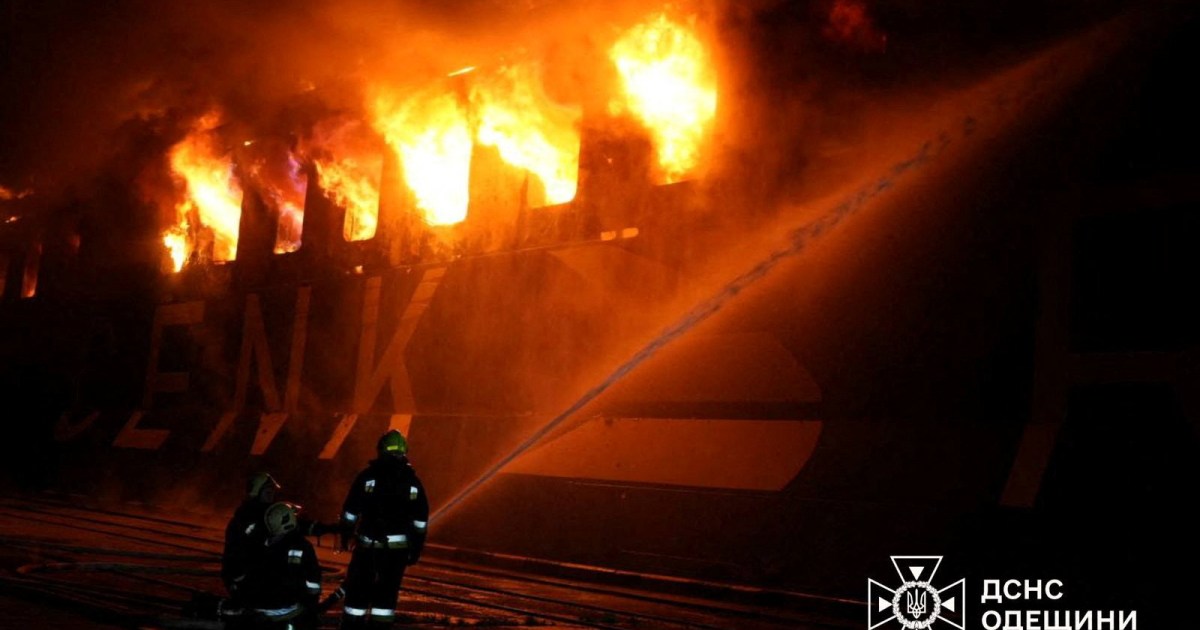
Fighting has also intensified in the Black Sea. Russian forces recently struck Ukrainian ports, damaging Turkish-owned vessels, including a ship carrying food supplies. An attack on Odesa set grain silos ablaze, according to Ukraine’s Deputy Prime Minister Oleksii Kuleba.
Related News

Eurovision winner Nemo returns trophy in protest over Israel’s inclusion
Photos: Syrians celebrate anniversary of Bashar al-Assad’s fall
Russia damages Turkish-owned vessels in attacks on two Ukrainian ports