Guyana President Claims No Deportee Accepted Under US Deal Has A Criminal Record
 14 September 2026
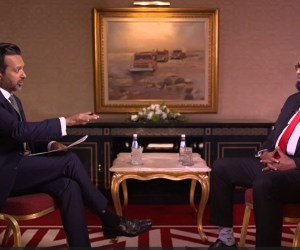


News Americas, NY, NY, Mon. Sept. 14, 2026: Guyana President Dr. Mohamed Irfaan Ali says no individual accepted under the country’s new migration cooperation framework with the United States has a criminal record, telling Al Jazeera that Guyanese authorities independently vet every person before approval.
The one-year framework, implemented through the International Organization for Migration’s Assisted Voluntary Return Program, saw its first cohort arrive in Guyana on September 4th, with six deportees from Cuba and Afghanistan – four from Cuba and two from Afghanistan. Ali said Guyanese authorities vetted all of them and confirmed they had no criminal records before accepting them.
Pushing back on suggestions the arrangement compromises Guyana’s sovereignty, Ali said the country retains full authority to reject individuals. “We can reject. We can say that we are not accepting this. That has not been taken away. The agreement is one in which Guyana has full control over what we accept,” he said in the 28 minutes interview.
On the vetting process, he added: “We do our vetting to our own satisfaction, and then we agree with the names. This is not a situation where the US turns up with a plane and just show[s] people off on our shores.”
Under the framework, the US government covers the full financial cost of relocation, while the IOM funds and manages reception, housing, healthcare access and other support services. The government has said the arrangement does not constitute permanent resettlement; individuals will remain in Guyana only while their immigration status is determined, after which they may return to their country of origin or relocate elsewhere.
This comes as The Guyana Human Rights Association (GHRA) said rejection is growing over the Government’s decision to collaborate with the United States on its highly controversial policy of removing migrants and asylum-seekers and sending them to third countries around the world.
In a statement on Saturday, the GHRA said the unpublished agreement is troubling, particularly given the serious concerns surrounding the methods employed by U.S. Immigration and Customs Enforcement (ICE), including aggressive arrests of migrants and asylum-seekers in public spaces.
“Implementation of an unpublished agreement with the Government of the USA is totally contrary to the letter and spirit of open and lawful governance, a long-standing aspiration of the Guyanese people who have seen breach after breach, illegal conduct after illegal conduct, done in its name. Furthermore, this behaviour is manifestly in breach of the Constitution of Guyana and with national, regional and international human rights laws and policies,” GHRA said.
Addressing broader questions about Guyana’s human rights record, Ali said: “We have exceptionally good human rights credentials,” citing the country’s record on indigenous land titling and budgetary support for Amerindian communities.
The claim comes amid arrests of the Guyana opposition leader – thrice in days and twice in one day, as well as a Member of Parliament of the We Invest In Nationhood party as well as staff members of Azruddin Mohamed last week. All spoke of poor conditions in the cells where they were held for 72 hours.
On migrants already in Guyana, he said: “We also have a lot of migrants coming into Guyana… from Venezuela, Cuba, wherever. We treat them; they get all the social services, they get all [support] without exception.”
Foreign Secretary Robert Persaud has said the framework followed months of negotiation between Georgetown and Washington. US Ambassador to Guyana Nicole Theriot said the US government is “grateful to Guyana for agreeing to assist us in resolving our migration issues.”
Guyana is one of at least six CARICOM nations to have agreed to or finalized similar third-country deportee arrangements with the US, alongside Antigua and Barbuda, Belize, Dominica, Grenada, St. Lucia, and St. Kitts and Nevis, the latter limited primarily to citizens of other CARICOM member states. Jamaica has also signed a memorandum of understanding with the US Department of Homeland Security to accept periodic third-country arrivals.
Ali also told Al Jazeera that he does not want Guyana to depend solely on its oil wealth. In recent months, oil revenues in the South American country have risen sharply as the US-Israel war on Iran grinds on, disrupting global energy supplies and driving up crude oil prices, with the country earning over US $700 million in August alone.
NewsAmericasNow will continue tracking developments in Guyana’s migration framework with the US. Reporting from Al Jazeera contributed to this story.
Related News
International Diplomat Of The Year Award For Jamaica’s Honorary Consul In Philadelphia
25 Years Later: Remembering The Caribbean Immigrants Who Died On 9/11
China Accuses US Official Of “Malicious” Attack Over Guyana Infrastructure Criticism