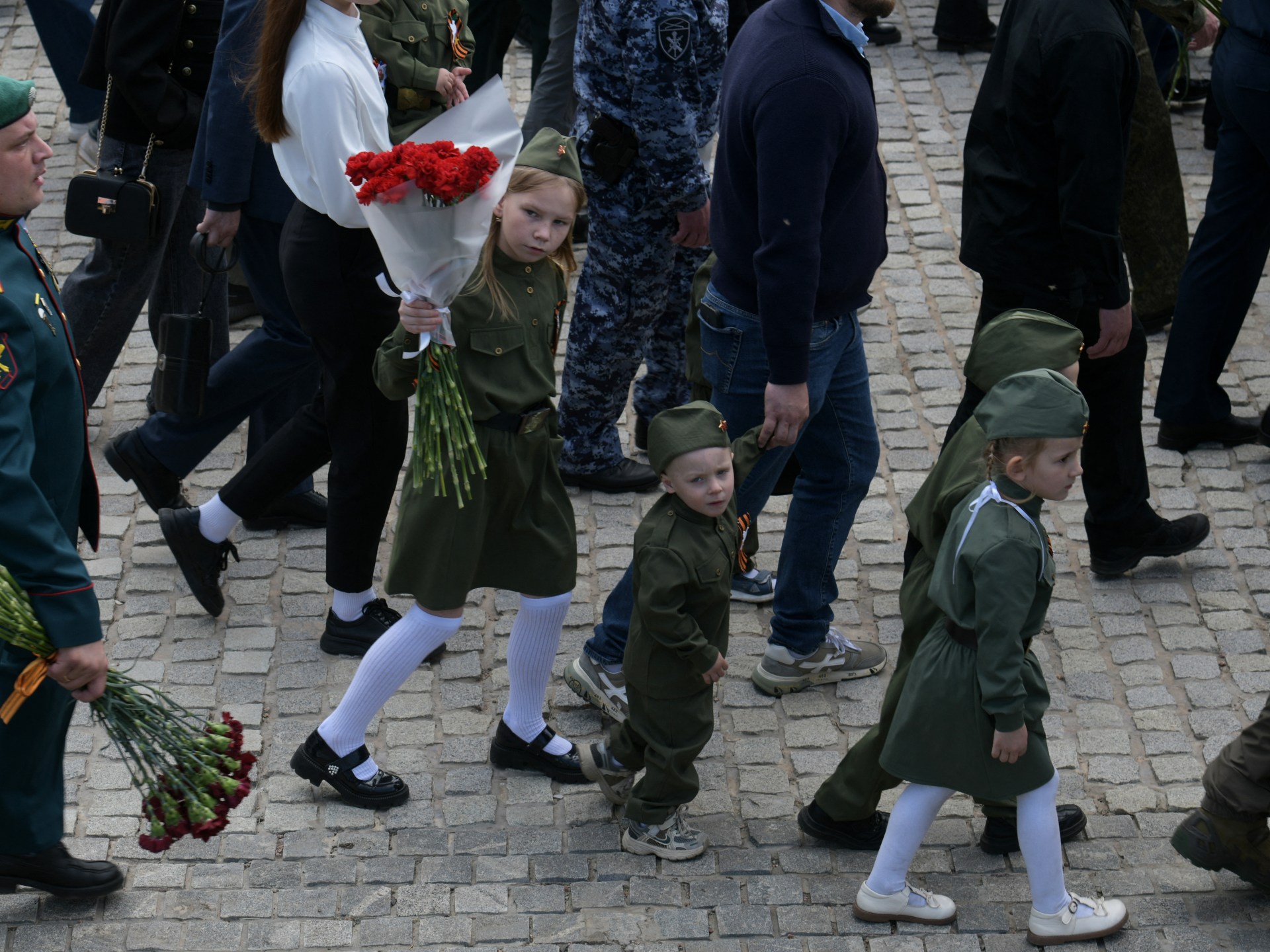

The European Union and United Kingdom have imposed sanctions on Russian institutions and officials accused of systematically deporting and indoctrinating Ukrainian children.
The EU announced measures against 23 state institutions and individuals on Monday. Britain simultaneously unveiled a broader package targeting 85 people and entities, roughly a third of them linked to what was described as Russia’s campaign to forcibly deport and militarise Ukrainian children.
- list 1 of 3Europol and partners trace 45 ‘forcibly transferred’ Ukrainian children
- list 2 of 3At least three killed, more than 10 injured in Russian attacks on Ukraine
- list 3 of 3Russia kills three Ukrainians in 24 hours, accuses Kyiv of violating truce
end of list
Russia has deported and forcibly transferred nearly 20,500 Ukrainian children since Russia launched its full-scale invasion in February 2022, an EU statement noted. It branded those actions grave breaches of international law.
The EU said its designations target institutions and individuals involved in programmes subjecting children to pro-Russian indoctrination, including patriotic events, ideological education and military-oriented activities.
The sanctions – which include asset freezes and travel bans – were approved by the EU’s 27 nations in coordination with Canada and Britain, which announced similar measures.
“Stealing children is not incidental. It is a deliberate Russian policy, a calculated attack on Ukraine’s future,” the EU’s top diplomat, Kaja Kallas, told a press conference.
Britain’s sanctions announcement named the Center for Military and Patriotic Training and Education of Youth, known as the warrior centre, a Russian state institution at which Ukrainian children are reportedly subjected to military training and pro-Kremlin ideology.
Advertisement
Also targeted was Yulia Sergeevna Velichko, Minister for Youth Policy in the Moscow-backed Luhansk People’s Republic, for her role in implementing state-led initiatives.
British Foreign Secretary Yvette Cooper said the UK would continue working alongside allies to support every effort to identify and trace children who had been taken.
Russia does not deny taking the children but has said it has done so for their protection, moving them away from frontline areas, and claims it is willing to return them when relatives come forward and can be verified.
The International Criminal Court issued an arrest warrant for Russian President Vladimir Putin in 2023 for the war crime of illegal deportation of children from Ukraine.
Responding to the announced sanctions, Ukrainian President Volodymyr Zelensky said: “These are the ones who ‘rewire’ the identity of Ukrainian children, help make them hate their homeland, and one day take up arms to fight against Ukraine.”
Britain’s broader sanctions package also took aim at Russian information warfare operations, with the remaining measures targeting individuals and entities linked to alleged Kremlin propaganda campaigns.
Among them were 49 people working for the Social Design Agency, a state-funded Russian organisation accused of running disinformation and interference operations, including attempts to establish pro-Russia organisations in Armenia and influence the outcome of upcoming elections.
Traditionally a strong Russian ally, the Caucasian country has recently been moving away from Moscow’s orbit.
Last week, the Armenian ambassador was summoned to protest what the Kremlin described as “terrorist threats against Russia” made by Zelenskyy in a speech delivered in Yerevan.