Tokyo protests as China blocks ‘dual-use’ exports to 20 Japanese companies
 25 February 2026
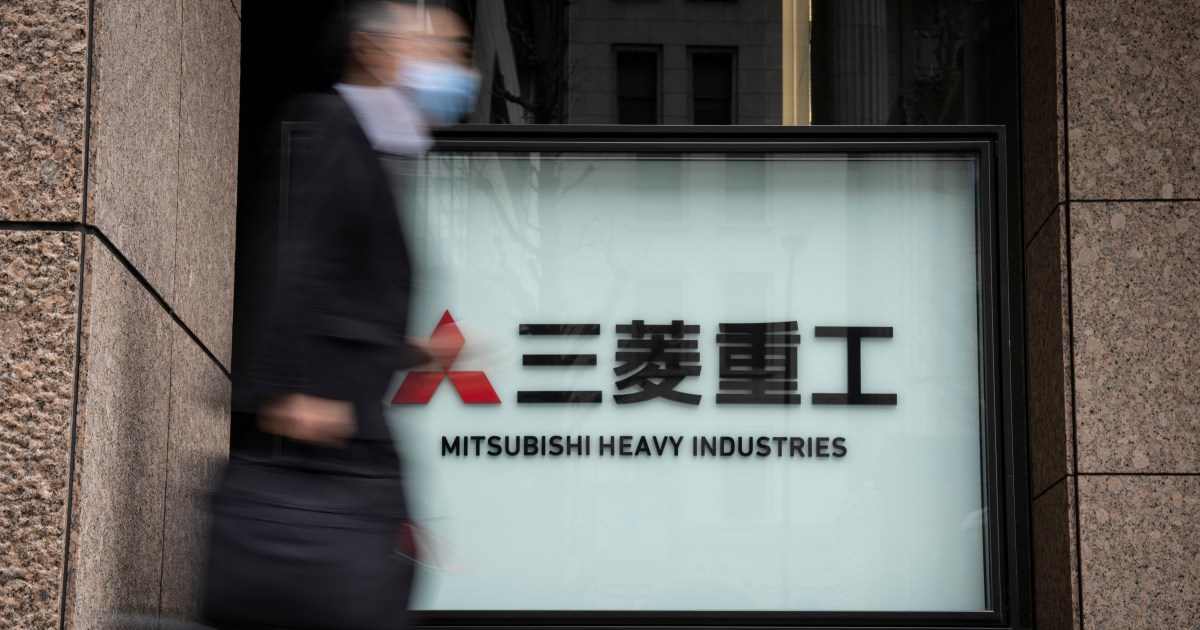

Japan has strongly protested China’s move to restrict the export of “dual-use” items to 20 Japanese business entities that Beijing says could be used for military purposes, in the latest twist in a months-long diplomatic row between the two countries.
Japanese Deputy Chief Cabinet Secretary Sato Kei said at a news conference that the move by China’s Ministry of Commerce on Tuesday was “deplorable” and would “not be tolerated” by Tokyo.
- list 1 of 4Suspect, four victims dead after stabbing attack in US state of Washington
- list 2 of 4Russia-Ukraine war: List of key events, day 1,462
- list 3 of 4Bolivia revives anti-drug alliance after nearly 18-year break with US
- list 4 of 4Aid groups petition Israeli Supreme Court as Gaza, West Bank work ban nears
end of list
Companies affected by China’s export ban on dual-use items, or items that can be used for civilian or military purposes, include Mitsubishi Heavy Industries’ shipbuilding group, aerospace and marine machinery subsidiaries, Kawasaki Heavy Industries, Japan’s National Defense Academy, and the Japan Aerospace Exploration Agency.
Beijing said restricting the export of dual-use items to the Japanese firms was necessary to “safeguard national security and interests and fulfil international obligations such as non-proliferation”, adding that the companies were involved in “enhancing Japan’s military strength”.
China’s Commerce Ministry said on Tuesday that it would also add another 20 entities to its export restrictions watchlist, including Japanese automaker Subaru, petroleum company ENEOS Corporation, and Mitsubishi Materials Corporation.
Chinese exporters must submit a risk assessment report for each company to ensure “dual-use items will not be used for any purpose that would enhance Japan’s military strength”, according to a statement on the Commerce Ministry’s website.
Advertisement
China has imposed similar restrictions on the US and Taiwan as a form of political protest, particularly over Washington’s ongoing unofficial support for the self-governed island. Beijing claims democratic Taiwan as its territory and has not ruled out using force for “reunification”.
Tokyo and Beijing have a historically acrimonious relationship, but diplomatic ties took a turn for the worse in November, when Japanese Prime Minister Sanae Takaichi told legislators that a Chinese attack on Taiwan would constitute a “survival-threatening situation” for Japan, which could necessitate military action.
Japan has had a pacifist constitution which restricts its use of force, but an attack on Taiwan could legally allow Tokyo to activate its army, the Self-Defence Forces, Takaichi said.
Takaichi’s remarks were some of the most explicit regarding whether Japan could become involved in a conflict in the Taiwan Strait, and have been accompanied by a push to expand Japan’s military capability.
Beijing reacted with fury to Takaichi’s remarks, discouraging Chinese citizens from visiting Japan, leading to a major drop in tourism revenue from Chinese visitors.
In January, Beijing also imposed Japanese export restrictions on rare earths like gallium, germanium, graphite and rare earth magnets that could be used for defence purposes, according to the US-based Centre for Strategic and International Studies (CSIS) think tank.
The CSIS said at the time that “these retaliatory measures underscore rising tensions between Beijing and Tokyo and serve as a pointed warning from China to countries that take explicit positions on cross-strait relations”.
Tokyo does not have official diplomatic relations with Taiwan, but several of its outlying islands, including Okinawa, are geographically closer to Taiwan than mainland Japan. Taiwan is also enormously popular with the Japanese public.
Related News
Russia and Ukraine to hold new talks in Geneva next week
Twelve killed in China fireworks shop blast during Lunar New Year
US sanctions officials from Marshall Islands and Palau, citing China fears