Russia suffers ‘32,000’ monthly Ukraine casualties, broken communications
 13 February 2026
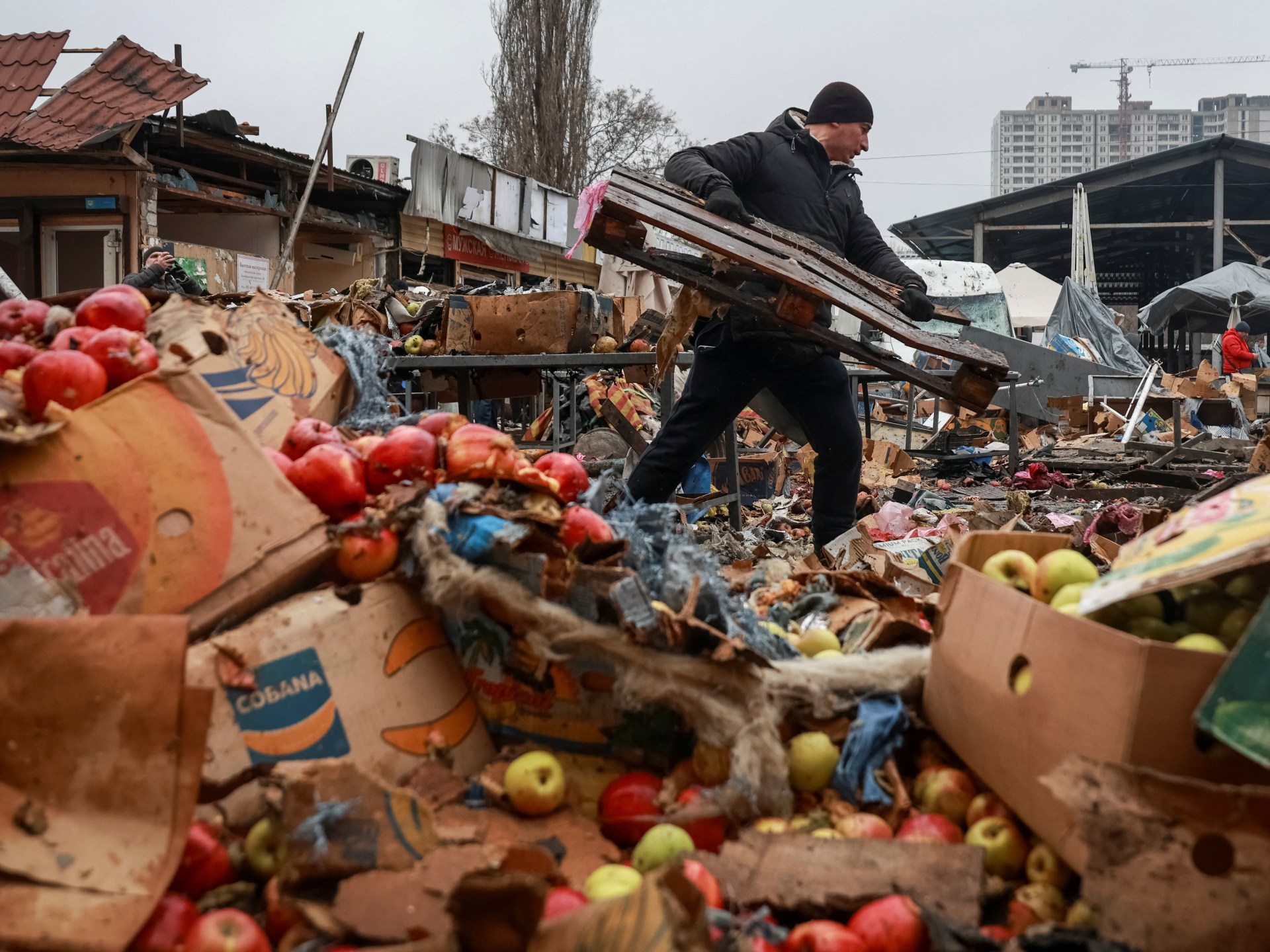

Russia unleashed a massive air assault on Ukraine’s cities on the day French Defence Minister Catherine Vautrin visited Kyiv. The February 7 assault was a repeat of Moscow’s similarly powerful attack on the day of NATO Secretary-General Mark Rutte’s visit days earlier, on February 3.
Beyond punishing Ukraine for strengthening its defence ties to the West, the attacks had a progressive character, said St Andrews University history professor Phillips O Brien.
- list 1 of 4In Ukraine, deaths from hypothermia rise as Russia attacks energy system
- list 2 of 4In Ukraine’s west, Hungarian minority rights collide with wartime politics
- list 3 of 4Russian strike kills father, 3 children in Ukraine, wounds pregnant mother
- list 4 of 4Russia bans WhatsApp, pushes state-backed alternative
end of list
“The first attack focusses on the east, particularly Kyiv and towns/cities near the front. Then a few days later, having extended and exhausted Ukrainian air [defence], the Russian assaults moved westward,” he wrote on Substack.
Sunday’s attack involved 408 drones and 39 missiles.
Kyiv downed all but 26 drones and 24 of the missiles, but the remainder dealt devastating damage to energy infrastructure, including, said Ukraine’s President Volodymyr Zelenskyy, to “facilities critical” to the nation’s nuclear power plants
One plant was forced to shut down, while others reduced output.

Russia has been trying to plunge Ukraine into darkness since mid-January with repeated combined strikes.
Civilians have weathered temperatures of -20 degrees Celsius ( -4 degrees Fahrenheit), and emergency crews have worked nonstop to restore power and heat faster than the Russians can knock them out.
Sometimes the strikes have been fatal.
Two toddler boys and their infant sister were killed along with their father in the eastern Ukrainian town of Bohodukhiv on Wednesday, when a Russian drone demolished their home. Their pregnant mother was the sole survivor. The explosion caused the house to collapse on top of the victims and started a fire.
Advertisement
The day before, a Russian air strike killed a 14-year-old girl and her mother in Ukrainian-controlled Donetsk.

On Thursday, some 300,000 people were left without electricity and water in Odesa after punishing Russian strikes. About 200 buildings were also without heat.
Zelenskyy promised changes in defence tactics, which remained confidential.
“In some regions, the way teams work is being almost completely reorganised … This also concerns oversight of the front-line supplies,” he said in a video address on Tuesday night.
Ukraine fights back
Ukraine has tried to target the airfields from which Russia launches its missiles and drones.
On February 5, Ukraine’s General Staff said it had fired Ukrainian-made FP-5 Flamingo cruise missiles at “hangar-type buildings” containing “pre-launch preparation” of ballistic missiles on the Kapustin Yar test site in Astrakhan, more than 400km (250 miles) inside Russia.
The Staff later confirmed damage to an assembly building and a logistics warehouse.

On Sunday, Ukraine attacked the Redkino Research Plant in the Tver region, describing it as a producer of dual-use goods such as fuel additives and explosives.
This trade in long-range strikes between Russia and Ukraine has stolen the headlines and overshadowed Russia’s slow progress relative to casualties in its ground war.
Oleksandr Syrskii, Ukrainian commander in chief, said confirmed casualties – those killed and seriously wounded – in January numbered 31,700, which, he said, was 9,000 more than recruitment for the month.
“Our goal is to keep the Russian aggressor in constant tension, inflict losses on him, and prevent him from advancing,” Syrskii posted on Telegram. “The tactics we have chosen are yielding results.”
Russian forces also suffered a major setback last week when Ukraine got SpaceX to disconnect their Starlink satellite terminals.
Russian forces have used Starlink to communicate, target Ukrainian artillery and navigate their drones.
Ukrainian military sources said that the number of assaults on the front had noticeably dropped as a result. A commander in the southern region of Zaporizhia told broadcaster Suspilne that “the intensity of the use of [First Person View] drones is somewhat lower than usual”.
Ukrainian Ministry of Defence adviser Serhiy Beskrestnov said Russia was offering $230 to Ukrainian “traitors” who would register Starlink terminals in their own name and hand them over for Russian use on the battlefield.
“The traitors are right not to hurry,” Beskrestnov wrote on Telegram, “because we will verify the Starlink numbers of the enemy with the data of the Public Service Center, and the ‘lovers of easy money’ will get 15 years or life imprisonment”.
Advertisement
Moscow was rushing to replace the disconnected Starlink terminals with Russian-made systems, Beskrestnov said.
“All antennas of these terminals look like a satellite dish for television with a diameter of 60-120 centimetres,” he wrote in instructions to drone operators.
Is peace what Russia wants?
Two rounds of tripartite talks among Russia, Ukraine and the United States in Abu Dhabi this year have produced an exchange of prisoners but no ceasefire.
Ukraine has signalled it is willing to attend a third round on February 17, but in three interviews over the past week, Russian Foreign Minister Sergey Lavrov has repeated Kremlin insistence on the undisclosed terms reached between Russian President Vladimir Putin and US President Donald Trump in Alaska last August.

Zelenskyy told journalists in Kyiv last week he fears the US and Russia will again attempt an overarching deal without Ukraine’s or Europe’s participation by June.
He said this timeline would aim to give Trump a boost before the US midterm Congressional elections in November.
Europe has consistently asked the US to put more pressure on the Kremlin for a ceasefire to happen.
On February 6, the European Commission (EC) proposed comprehensive new sanctions against Russian oil exports, which are largely funding Russia’s war against Ukraine.
The bloc proposed “a full maritime services ban” for Russian seaborne oil, suggesting joint action with the G7 to cover the world as comprehensively as possible.
“While Ukraine continues to defend itself with extraordinary courage on the battlefield, the Kremlin is doubling down on war crimes,” the commission said.
“This is not the conduct of a state seeking peace. It is the behaviour of a nation waging a war of attrition.”

About a third of Russian oil is sold on tankers from Greece, Cyprus and Malta, according to the Reuters news agency. Last year, the European Union and G7 forced those ships to carry Russian oil priced below market value – currently $44.10 versus $69 a barrel for Brent crude.
The new EU measure aims to stop the trade altogether.
“It will slash further Russia’s energy revenues and make it more difficult to find buyers for its oil,” the commission said.
“Russia will only come to the table with genuine intent if it is pressured to do so. This is the only language Russia understands,” The commission added.
The EC added 43 tankers to the Russian shadow fleet, bringing the total number of ships identified as evading existing sanctions to 640.
The sanctions would close loopholes in previous financial restrictions by covering regional Russian banks and cryptocurrencies, and new bans were introduced against metals and chemical imports from Russia, and technology exports to Russia via third parties.
Advertisement
India, one of Russia’s biggest export markets, is dropping Russian oil following US pressure, reported Reuters, saying Indian refiners had booked no Russian deliveries past mid-March.

Related News

After barrage of threats, US and Iran set to hold talks on Friday
In Ukraine, deaths from hypothermia rise as Russia attacks energy system
Russia says it will stick to limits of expired nuclear treaty if US does