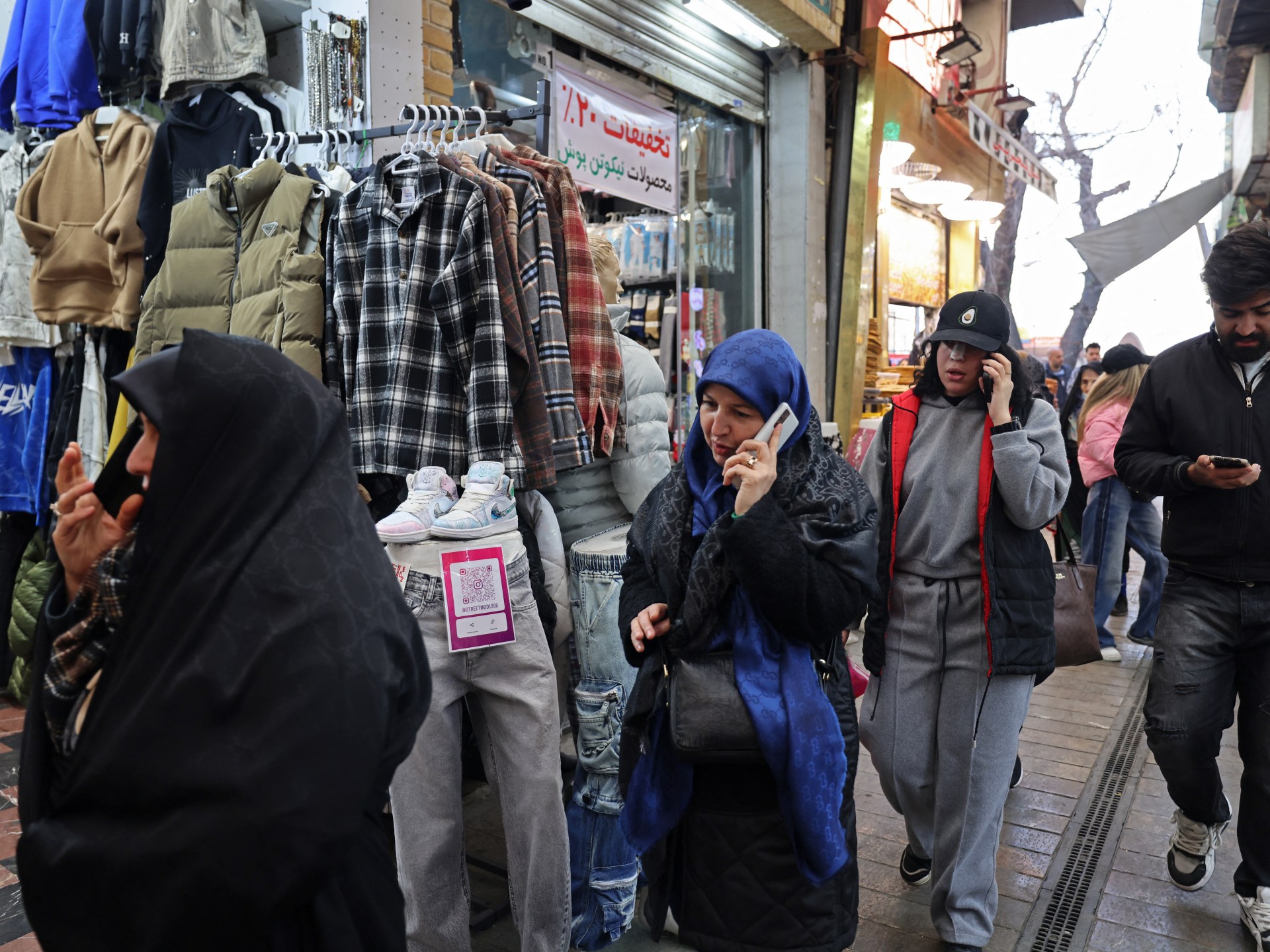
‘Nothing definitive’ reached about Iran during Netanyahu’s visit with Trump
 11 February 2026
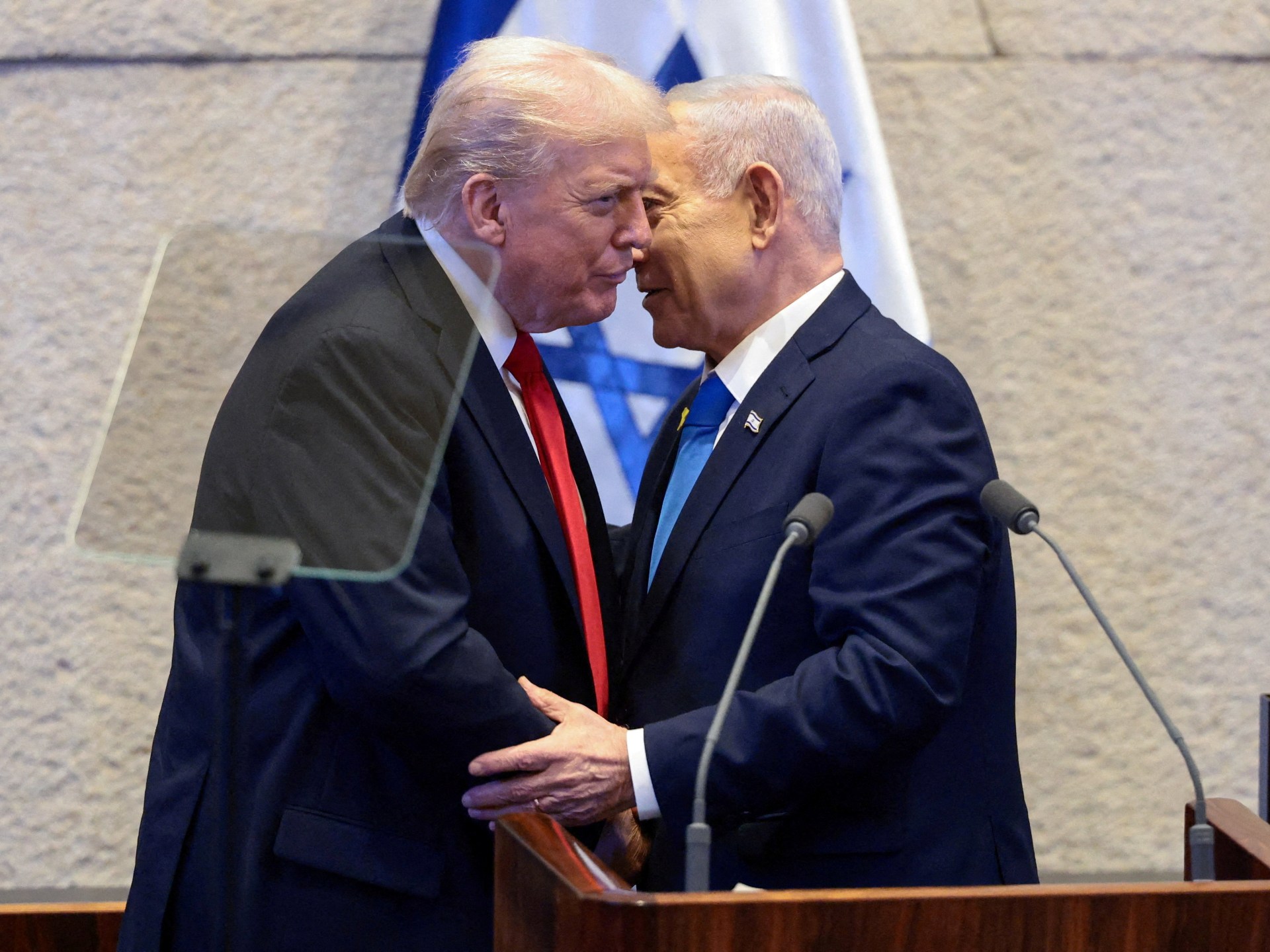

United States President Donald Trump has concluded a White House meeting with Israeli Prime Minister Benjamin Netanyahu, saying that “nothing definitive” had been reached during their exchange.
But he added that US talks with Iran would continue, as he pushes for Tehran to concede to a list of demands.
- list 1 of 3Young and old struggle to get their studies back on track in Gaza
- list 2 of 3More Palestinians return to Gaza via Rafah as Israeli attacks continue
- list 3 of 3Arab and Muslim nations at UN condemn Israel’s ‘annexation’ plan
end of list
“It was a very good meeting, the tremendous relationship between our two Countries continues,” Trump said of Israel.
“There was nothing definitive reached other than I insisted that negotiations with Iran continue to see whether or not a Deal can be consummated.”
Wednesday’s meeting was Trump’s sixth time hosting Netanyahu in the US since the start of his second term. They have met a total of seven times — including once in Israel — since January 2025.
The latest visit came just days after US and Iranian officials held indirect talks in Oman aimed at diverting a military confrontation that could spill into the wider Middle East region.
While Arab leaders have largely advocated for deescalation, Netanyahu has repeatedly called for further military action against Iran.
A private meeting
Netanyahu’s latest visit took place behind closed doors. After their visit was over, Trump posted on his Truth Social account that it had been a “tremendous meeting”. He also wrote that he had hope a deal could be struck with Iran.
“If it can, I let the Prime Minister know that will be a preference,” Trump said. “If it cannot, we will just have to see what the outcome will be.”
Trump previously sided with Israel in a 12-day war against Iran last June. The conflict culminated with US strikes on three Iranian nuclear sites, in a military operation dubbed “Midnight Hammer”.
Advertisement
In Wednesday’s post, the US president appeared to threaten further military action against Iran, pointing out that June’s attack came after talks on Iran’s nuclear programme failed to make progress.
“Last time Iran decided that they were better off not making a Deal, and they were hit with Midnight Hammer,” Trump wrote. “That did not work well for them. Hopefully this time they will be more reasonable and responsible.”
Netanyahu’s office, meanwhile, offered few details, saying only that the pair discussed Israel’s “security needs” and agreed to “continued coordination and close ties”.
Among the topics discussed were “negotiations with Iran, Gaza and regional developments”, the statement said.
Iran says ballistic missile ‘non-negotiable’
Trump has signalled optimism in the wake of Friday’s talks in Oman, which included US envoy Steve Witkoff, the president’s son-in-law Jared Kushner and Iranian Foreign Minister Abbas Araghchi.
The gathering came after the US surged military assets to the region, raising the prospect of a military entanglement.
Since January, Trump has pledged to strike Iran if the country’s security agents kill protesters involved in recent antigovernment demonstrations.
Iran’s Supreme Leader Ayatollah Ali Khamenei, in turn, warned of a “regional war” in the event of a US attack.
Regional powers across the Middle East have pushed for a diplomatic solution to avoid a military clash.
The Trump administration, meanwhile, has not been clear on the scope of its talks with Iran.
However, officials have told US media outlets that the recent negotiations hinge on three main demands: ending Iran’s nuclear enrichment programme, curtailing its ballistic programme and cutting its support for regional proxies, a goal long held by Netanyahu as well.
The US had previously entered into an agreement to scale back Iran’s nuclear programme in 2015.
That multilateral deal, known as the Joint Comprehensive Plan of Action (JCPOA), offered Iran sanctions relief. The United Kingdom, France, China, Russia, Germany and the European Union were all participants.
But in 2018, during his first term, Trump withdrew from the JCPOA. Ever since, he has unsuccessfully pursued a new agreement while re-imposing “maximum pressure” sanctions on Iran.
Iranian officials have signalled they are open to reaching a new deal on their nuclear programme, which they have maintained is only for civilian purposes. But they maintain their ballistic missile capabilities should remain off limits.
“The Islamic Republic’s missile capabilities are non-negotiable,” Ali Shamkhani, an adviser to Khamenei, was quoted by state media as saying on Wednesday.
Advertisement
Iran’s President Masoud Pezeshkian, meanwhile, said that his country was ready to prove the peaceful nature of its nuclear programme but would “not yield to excessive demands”.
Netanyahu brings ‘maximalist demands’
Speaking to Al Jazeera, Barbara Slavin, a fellow at the US-based Stimson Center think tank, said Netanyahu brought “maximalist demands” to his White House meeting.
“He considers Iran to be a mortal threat to Israel. He wants it weakened in any possible way. He would love to see regime change,” Slavin told Al Jazeera.
“But if he can’t have that, he would like to make sure that Iran has no nuclear programme whatsoever and that it has no missiles that could strike Israel.”
She added that the Israeli prime minister “clearly was worried, especially because Donald Trump said some rather optimistic things after the talks in Oman”.
Al Jazeera correspondent Nour Odeh also pointed to the prospect of early elections in Israel, which might further incentivise Netanyahu to push Trump to take a hard line.
“Toppling the government in Iran would make him the king of all kings, as far as Israeli policy is concerned, and that’s something he can take to the ballot and win with,” Odeh said.
“Netanyahu now needs to convince Trump that a deal is not something that will yield results and that Iran cannot be trusted.”
Still, Odeh explained that Netanyahu must also be prepared for the possibility that the US-Iran negotiations will succeed.
“If a deal is reached, he needs to make sure that this is up to par with what Israel can live with,” Odeh explained. “He wants Iran to be permanently disabled, and that, in effect, is a formula to ensure that Israel continues to be the hegemon in the region.”
Highlighting Gaza
In his post on Truth Social, Trump said he and Netanyahu also discussed the “tremendous progress being made in Gaza, and the Region in general”.
Since October 2023, Israel has led a genocidal war in Gaza that has killed an estimated 72,045 Palestinians and wounded 171,686.
But last year, the Trump administration advocated for a 20-point Gaza “ceasefire” plan that was adopted in October.
It has since announced in January that the plan was entering “phase two”, although major questions persist, including over the disarmament of Hamas.
Meanwhile, Israeli attacks have continued. On Wednesday, a Palestinian child was wounded by Israeli gunfire in the Batn as-Sameen area, south of Khan Younis, according to the Wafa news agency.
Israeli air strikes and artillery shelling also targeted areas under Israeli military control east of the city, Al Jazeera’s team in Gaza reported.
Since the first phase of the ceasefire agreement came into effect in October, 591 Palestinians have been killed and 1,578 injured, according to the Gaza Ministry of Health.
Also on Wednesday, Netanyahu signed a document establishing Israel’s membership in Trump’s controversial Board of Peace during a meeting with US Secretary of State Marco Rubio.
The board was initially designed to supervise Gaza’s ceasefire, but Trump has since pushed it to take on a wider role in resolving global conflicts. Some critics have accused the US president of seeking to create an alternative to the United Nations.
Advertisement
Netanyahu, who will hold a seat on the multinational board, currently faces an arrest warrant from the International Criminal Court (ICC) over alleged war crimes in the Palestinian territory.
Related News
Can Trump’s ‘madman theory’ reshape Iran and the Middle East?
Sudan’s war displaced crisis peaks as millions eye return to ruined homes
Venezuela’s police, military pledge loyalty to interim President Rodriguez