
Israel has released one Lebanese civilian detainee and has pledged to free five prisoners, the first such handover since the outbreak of the latest Israel-Hezbollah war six months ago.
Prime Minister Benjamin Netanyahu said in a statement on Thursday that Israel agreed to release the Lebanese civilians held by Israeli forces in southern Lebanon after Beirut helped search for the bodies of Lebanese Jewish leaders who were “abducted and murdered by terrorist organisations” in the 1980s.
- list 1 of 3Israel continues attacks on Syria, Lebanon despite US push for diplomacy
- list 2 of 3Israeli strike kills ‘newlywed’ woman in south Lebanon, wounds others
- list 3 of 3US designates Hezbollah an Iranian proxy, sanctions funding network
end of list
Netanyahu’s statement added that after being interrogated, the five detainees were found not to be “members of a terrorist organisation” or “involved in terrorism”.
The first released prisoner, identified as Malek Ghazi, was handed over to the Lebanese army via the International Committee of the Red Cross (ICRC), a Lebanese security official said.
Ghazi was handed over to the ICRC at the border crossing in the southern Lebanese coastal town of Naqoura. He was then transferred to a Lebanese army intelligence office in the southern port city of Tyre, Lebanon’s state-run National News Agency reported.
Ghazi’s family, hailing from the southeastern town of Ain Ata near the southern border village of Shebaa, said last October that they had lost contact with him after he went out to exercise.
He is the first citizen held by Israel to be released since US-brokered negotiations between Beirut and Tel Aviv began in April.
Lebanese Prime Minister Nawaf Salam hailed the release in a statement, thanking “the American administration … for the efforts exerted in this regard”.
Advertisement
Salam pledged to continue working “until the release of all our prisoners, the disclosure of the fate of the missing, and the achievement of a complete Israeli withdrawal from Lebanese territory”.
In its last round of negotiations with Israel in August, Lebanon demanded the release of detainees held by Israel since the 2024 war between Israel and Hezbollah, a Lebanese official told the AFP news agency at the time.
Lebanese authorities have not announced the number of citizens held by Israel since 2024, but a list of more than 30 people has been compiled by their families and a committee following up on their cases.
After Israel launched its genocidal war on Gaza in October 2023, clashes between the Israeli army and Hezbollah began. This led to over a year of hostilities that escalated into a full-blown war in 2024.
Two years later, Lebanon was fully drawn into the conflict after the US and Israel launched a war on Iran when Hezbollah, a key ally of Iran, fired rockets into Israel in retaliation for the killing of Iranian Supreme Leader Ayatollah Ali Khamenei. Israel responded with heavy air strikes and a ground invasion that have killed more than 4,300 people in Lebanon.
Violence has slowed since a US-Iran memorandum of understanding provided for a “ceasefire” in June, followed by an agreement between Israel and Lebanon later that same month.
The Lebanon-Israel deal calls for the disarmament of Hezbollah, a gradual withdrawal of Israeli forces from southern Lebanon and the deployment of the Lebanese army to the region, starting in “pilot zones”.
While another round of talks is expected to take place in Rome later this month, Israel continues to launch attacks across southern Lebanon.
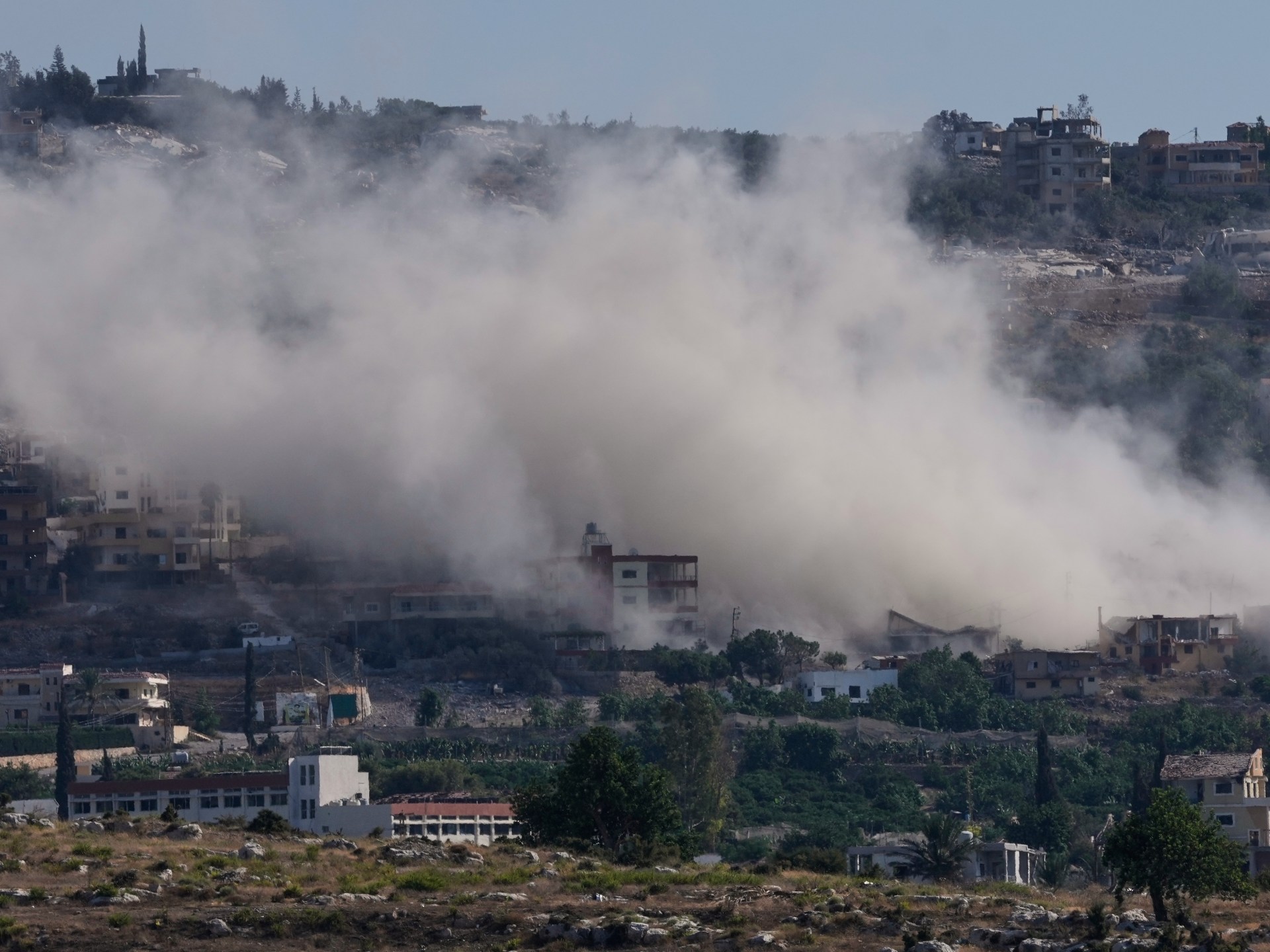
On Thursday, Israeli forces advanced into Halta village in southeastern Lebanon near the border with the Israeli-occupied Golan Heights, Lebanon’s state-run National News Agency reported. Israeli drones also flew over the Tyre region at dawn.
Israeli forces also carried out detonations in the south-central towns of Haddatha and Baraachit in Nabatieh governorate and demolished homes in the coastal southern town of al-Mansouri, the news agency reported.
Related News
Nearly 9,000 killed in Israeli attacks on Lebanon since 2023
Israel kills or injures 7 children a day in Lebanon invasion, report says
‘No one else like him’: Argentinians rally for Lionel Messi