‘Game is over’: Iran’s ex-leaders, hardliners clash after protest killings
 03 February 2026

Tehran, Iran – Several of Iran’s former leaders, including some who are currently imprisoned or under house arrest, have released damning statements over the killing of thousands during nationwide protests, garnering threats from hardliners.
The Iranian government claims that 3,117 people were killed during the antiestablishment protests. The government has rejected claims by the United Nations and international human rights organisations that state forces were behind the killings, which were mostly carried out on the nights of January 8 and 9.
- list 1 of 3Will Hezbollah continue to avoid responding to Israel’s attacks on Lebanon?
- list 2 of 3What would be the impact of a US attack on Iran?
- list 3 of 3US military says it shot down an Iranian drone in Arabian Sea
end of list
The United States-based Human Rights Activists News Agency (HRANA) says it has verified 6,854 deaths and is investigating 11,280 other cases.
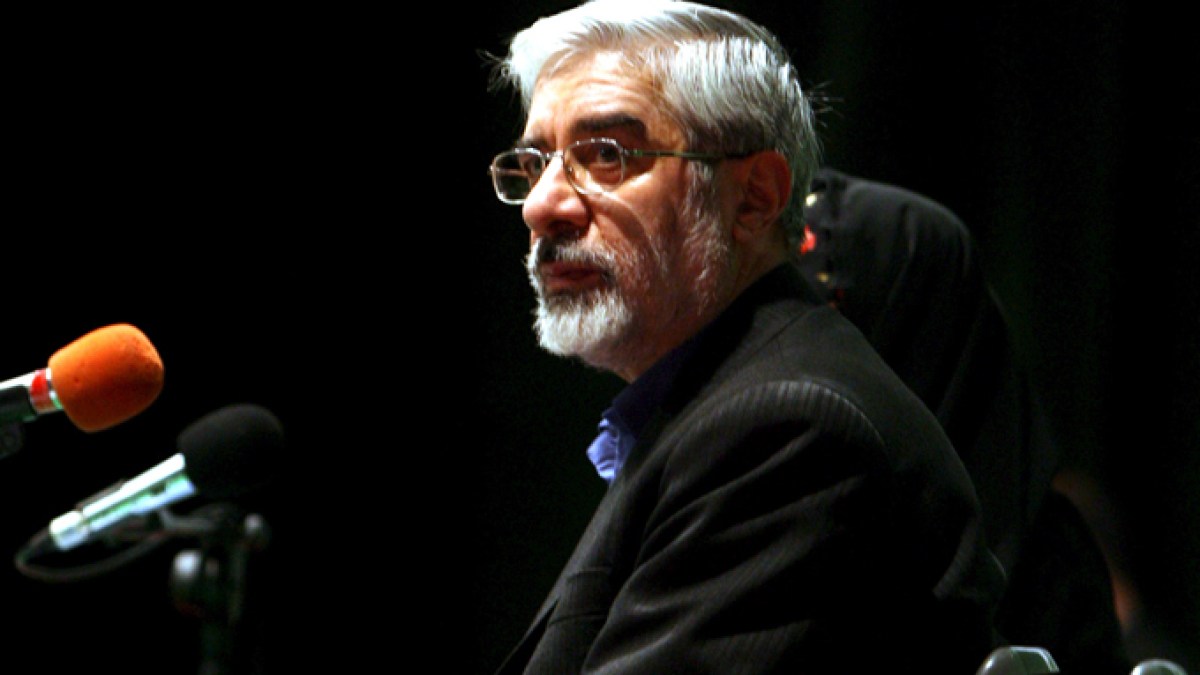
“After years of ever-escalating repression, this is a catastrophe that will be remembered for decades, if not for centuries,” wrote Mir Hossein Mousavi, a former reformist presidential candidate who has been under house arrest since the aftermath of the Green Movement of 2009.
“How many ways must people say that they do not want this system and do not believe your lies? Enough. The game is over.”
Mousavi told state forces to “put down your guns and step aside from power so that the nation itself can bring this land to freedom and prosperity”, and stressed that this must be done without foreign intervention amid the shadow of another war with the US and Israel.
He said that Iran is need of a constitutional referendum and a peaceful, democratic transition of power.
A group of 400 activists, including figures from inside and outside the country, backed Mousavi’s statement.
Advertisement
Mostafa Tajzadeh, a prominent jailed former reformist politician, said that he wants Iran to “move beyond the wretched conditions that the guardianship of Islamic jurists and the failed rule of the clergy have imposed on the Iranian nation”.
In a short statement from prison last week, he said this would be contingent upon the “resistance, wisdom, and responsible action of all citizens and political actors” and called for an independent fact-finding mission to uncover the true aspects of “atrocities” committed against protesters last month.
‘Major reforms’
Other former heavyweights have heavily criticised Iran’s current course, but have avoided calling for the effective removal of the Islamic Republic from power.
Former President Hassan Rouhani, who many believe is eyeing a potential future return to power, last week gathered his ex-ministers and insiders for a recorded speech, and called for “major reforms, not small reforms”.
He acknowledged that Iranians have been protesting for a variety of reasons over the past four decades, and insisted the state must listen to them if it wants to survive, but did not mention the internet blackout and killing of protesters during his tenure in November 2019.
Rouhani added that the establishment must hold public votes on major topics, including foreign policy and the ailing economy, in order to avoid further nationwide protests and prevent the population from looking to foreign powers for help.
Mohammad Khatami, the reformist cleric who was president from 1997 to 2005, adopted a softer tone and said violence derailed protests that could have helped “expand dialogue to improve the country’s affairs”.
He wrote in a statement that Iran must “return to a forgotten republicanism, and an Islamism that embraces republicanism in all its dimensions and requirements, placing development together with justice at the core of both foreign and domestic policy”.
Mehdi Karroubi, another senior reformist cleric who had his house arrest lifted less than a year ago after 15 years, called the protest killings “a crime whose dimensions language and pen are incapable of conveying” and said the establishment is responsible.
“The wretched state of Iran today is the direct result of Mr. Khamenei’s destructive domestic and international interventions and policies,” he wrote, in reference to Supreme Leader Ayatollah Ali Khamenei, who has been in absolute power for nearly 37 years.
Karroubi noted one prominent example as the 86-year-old leader’s “insistence on the costly and futile nuclear project and the heavy consequences of sanctions over the past two decades for the country and its people”.

Political prisoners rearrested
Three prominent Iranian former political prisoners were arrested and taken to prison by security forces once again last week.
Advertisement
The Fars news agency, affiliated with the Islamic Revolutionary Guard Corps (IRGC), said the reason for the arrests of Mehdi Mahmoudian, Abdollah Momeni, and Vida Rabbani was that they had sneaked out Mir Hossein Mousavi’s statement from his house arrest.
Mahmoudian is a journalist and activist, and co-writer of the Oscar-nominated political drama movie, It Was Just an Accident, which won the Palme d’Or at the 2025 Cannes Film Festival. Momeni and Rabani are also political activists who have previously been arrested by the Iranian establishment multiple times.
The three were among 17 human rights defenders, filmmakers and civil society activists, including Nobel Peace Prize laureate Narges Mohammadi and internationally recognised lawyer Nasrin Sotoudeh, who co-signed a statement last week that put the blame for the protest killings on the supreme leader and the theocratic establishment.
“The mass killing of justice seekers who courageously protested this illegitimate system was an organised state crime against humanity,” they wrote, condemning the firing on civilians, the attacks on the wounded, and the denial of medical care as “acts against Iran’s security and betrayal of the homeland”.
The activists called for holding a referendum and constituent assembly to allow Iranians to democratically decide their political future.
Hardliners incensed
In hardline-dominated circles and among their affiliated media, the mood has been entirely different.
On Sunday, lawmakers in parliament donned the uniforms of the IRGC, which was last week designated a “terrorist” organisation by the European Union.
They chanted “Death to America” and promised they would seek out European military attaches working at embassies in Tehran to expel them as “terrorists”.
Nasrollah Pejmanfar, a cleric who represents northeast Mashhad in the parliament, told a public session of parliament on Sunday that former President Rouhani must be hanged for favouring engagement with the West, echoing a demand also made by other hardline peers in recent years.
“Today is the time for the ‘major reform’, which is arresting and executing you,” he said, addressing Rouhani.
Amirhossein Sabeti, another firebrand lawmaker, condemned the government of President Masoud Pezeshkian – but not Khamenei or the establishment – for proceeding with mediated talks with the US.
“Today, the people of Iran are waiting for a pre-emptive attack on Israel and US bases in the region, not talks from a position of weakness,” he claimed.
Related News
Iran announces live-fire naval drills near US warships amid tensions
At least three people killed in Russian attacks on Ukraine
Judge blocks US gov’t move to end deportation protections for Ethiopians