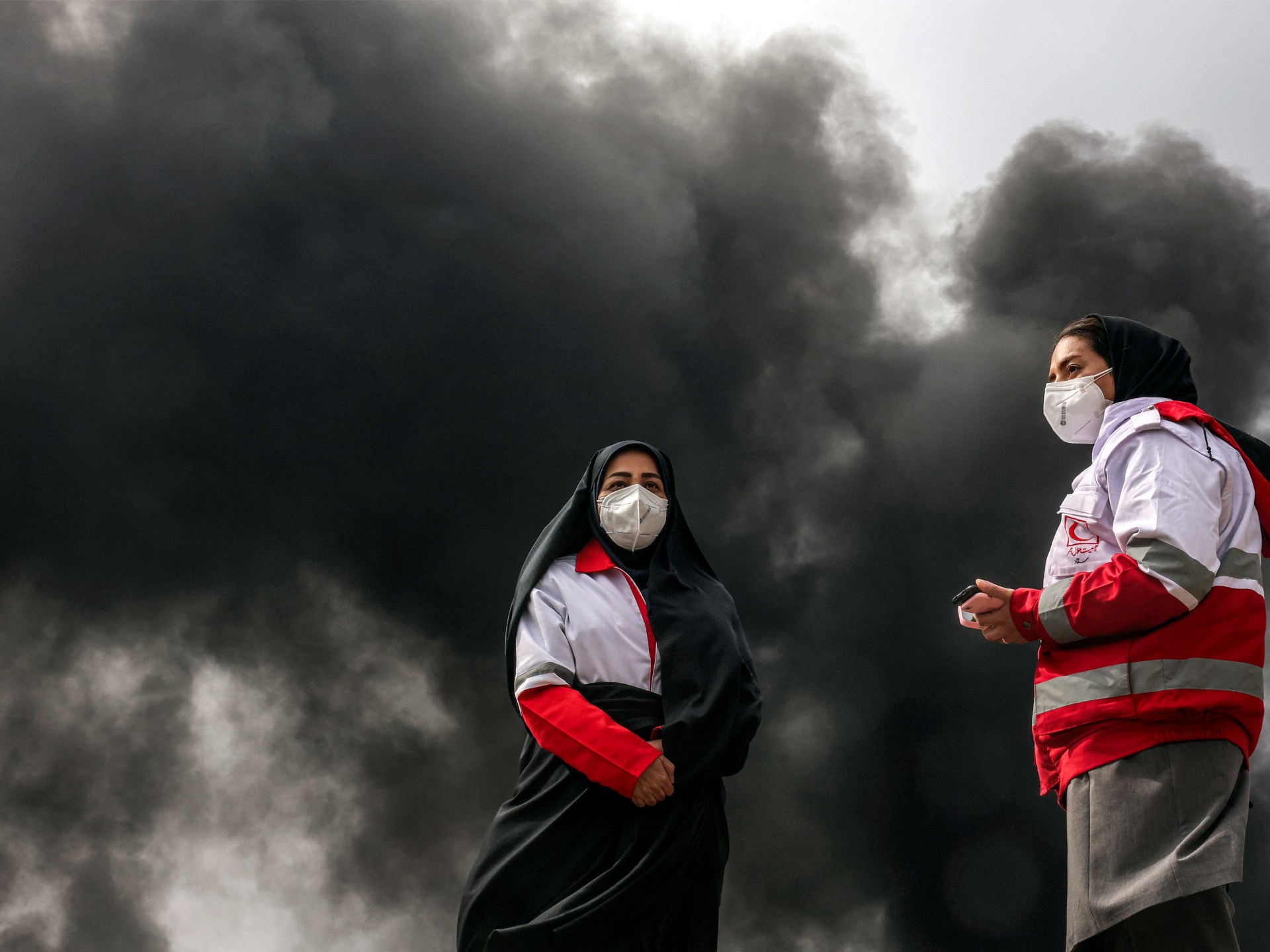

United States President Donald Trump has ordered the Department of Defense, which the Trump administration calls the “Department of War”, to pause attacks on Iran’s power infrastructure for five days, he said on Monday.
The US president’s order came the day after he issued a 48-hour ultimatum to Iran to reopen the critical shipping route through the Strait of Hormuz or risk US attacks on its power plants. In response, Iran said it would attack power plants in Israel and the Gulf.
Trump’s ultimatum over Hormuz had been set to expire at 23:44 GMT on Monday.
In a Truth Social post on Monday, however, Trump claimed that Washington and Tehran had had “very good and productive conversations regarding a complete and total resolution of our hostilities in the Middle East”.
However, Iranian officials have denied this. Following Trump’s ultimatum over the Strait of Hormuz, Iran’s Tasnim news agency, citing an Iranian official, reported that the strait will not return to prewar conditions and energy markets will remain unsettled, adding that no negotiations with the US are under way.
Tehran is conducting regional dialogue, however.
Three weeks into the US-Israel war on Iran, we take a look at what Trump threatened, and how Iran’s Islamic Republic government has threatened to respond.
What did Trump forewarn?
On Saturday at 23:44 GMT, Trump wrote in a Truth Social post: “If Iran doesn’t FULLY OPEN, WITHOUT THREAT, the Strait of Hormuz, within 48 HOURS from this exact point in time, the United States of America will hit and obliterate their various POWER PLANTS, STARTING WITH THE BIGGEST ONE FIRST.”
Advertisement
Trump did not specify which plant he was referring to as “the biggest”. However, Iran’s largest power plant is the Damavand Combined Cycle Power Plant on the outskirts of Tehran province. Also known as the Pakdasht plant, it has a capacity of about 2,900 megawatts. This is enough to meet the electricity needs of several major cities combined.
Other large power plants in Iran include the Kerman plant in the southeast of Iran, with a capacity of about 1,910 megawatts, and the Ramin power plant in the Khuzestan province with a capacity of about 1,890 megawatts. This is roughly equivalent to the electricity needs of a mid‑sized province or a large city.
On March 2, Ebrahim Jabari, a senior adviser to the commander-in-chief of Iran’s Islamic Revolutionary Guard Corps (IRGC), announced that the Strait of Hormuz – through which 20 percent of the world’s oil and gas is transported from Gulf producers – was “closed”. This has contributed to the recent surge in oil prices, which have surpassed $100 a barrel, compared with the prewar Brent crude price – the international benchmark – of about $65.

How did Iran respond to Trump’s ultimatum?
The IRGC threatened to retaliate if Iranian power plants were targeted, saying it would hit power plants in Israel as well as any supplying electricity to military bases hosting US troops and assets in the region.
Iran’s Speaker of Parliament Mohammad Bagher Ghalibaf also posted on X on Sunday: “Alongside military bases, those financial entities that finance the US military budget are legitimate targets. US treasury bonds are soaked in Iranians’ blood. Purchase them, and you purchase a strike on your HQ and assets. We monitor your portfolios. This is your final notice.”
An IRGC statement shared by state media on Monday, said: “The lying … US President has claimed that the Revolutionary Guards intends to attack the water desalination plants and cause hardship to the people of the countries in the region.”
The statement added: “We are determined to respond to any threat at the same level as it creates in terms of deterrence … If you hit electricity, we hit electricity.”
“The Strait of Hormuz will be completely closed and will not be opened until our destroyed power plants are rebuilt,” the IRGC said in a statement.
At the same time, Iranian leaders have insisted that the strait is only closed to the US and Israel.
“We have not closed the strait. In our opinion, the strait is open. It is closed only to ships belonging to our enemies, countries that attack us. For other countries, ships can pass through the strait,” Iranian Foreign Minister Abbas Araghchi told Japan’s Kyodo News late on Friday.
Advertisement
Iranian President Masoud Pezeshkian said on Sunday that the strait was “open to all except those who violate our soil”.
“The illusion of erasing Iran from the map shows desperation against the will of a history-making nation. Threats and terror only strengthen our unity,” he said in a post on X.
Countries have been scrambling to reach agreements with Iran for safe passage through the strait. So far, a handful of mainly Indian, Pakistani, Turkish and Chinese-flagged ships have been allowed to pass during the past week.
Which places could Iran target?
While Iran has not named specific sites that it would target, it has broadly said that it would aim to hit Israeli power plants and infrastructure in response to its own power plants and infrastructure being struck.
Ghalibaf posted on X on Sunday: “Immediately after power plants and infrastructure in our country are targeted, vital infrastructure as well as energy and oil infrastructure across the entire region will be considered legitimate targets and will be irreversibly destroyed.”
Iran has also stated that “financial entities” that finance US military assets would be targeted. Besides Ghalibaf’s X post on Sunday threatening such entities, the Khatam al-Anbiya, Iran’s unified military command, said on Wednesday, March 11, that “the enemy left our hands open to targeting economic centres and banks belonging to the United States and the Zionist regime in the region”.
Power plants
Israel has more than 200 power plants, some of the largest ones being Orot Rabin north of Tel Aviv, with a capacity of around 3,900 megawatts, and Rutenberg in Ashkelon, with a capacity of around 2,250 megawatts.
While attacks on Iran’s energy infrastructure will hurt Iran, the consequences of attacks on energy in the Gulf states could be more catastrophic since they consume around five times more power per capita.
Energy infrastructure
Over the course of the war, energy infrastructure in the Gulf has repeatedly come under attack.
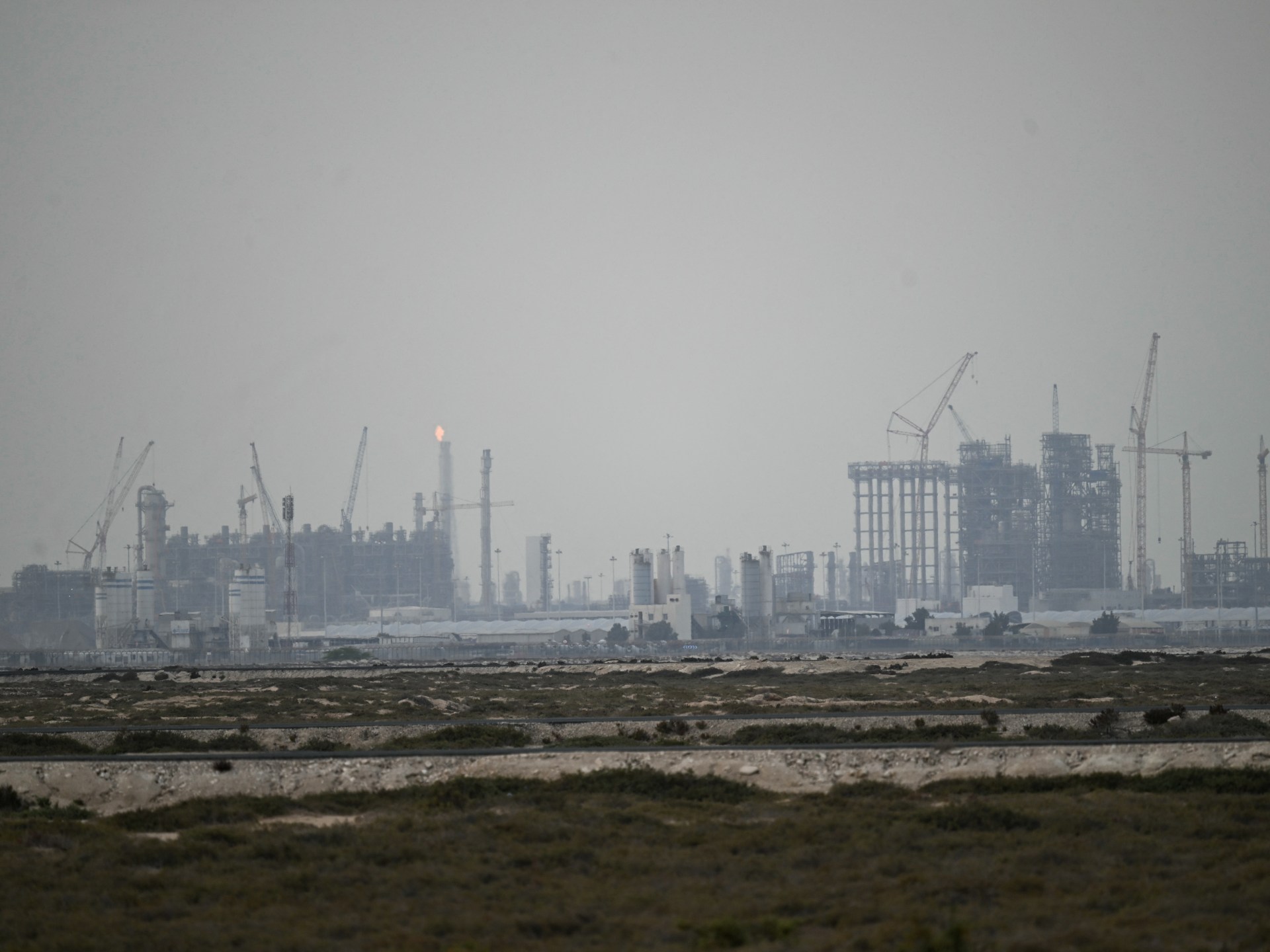
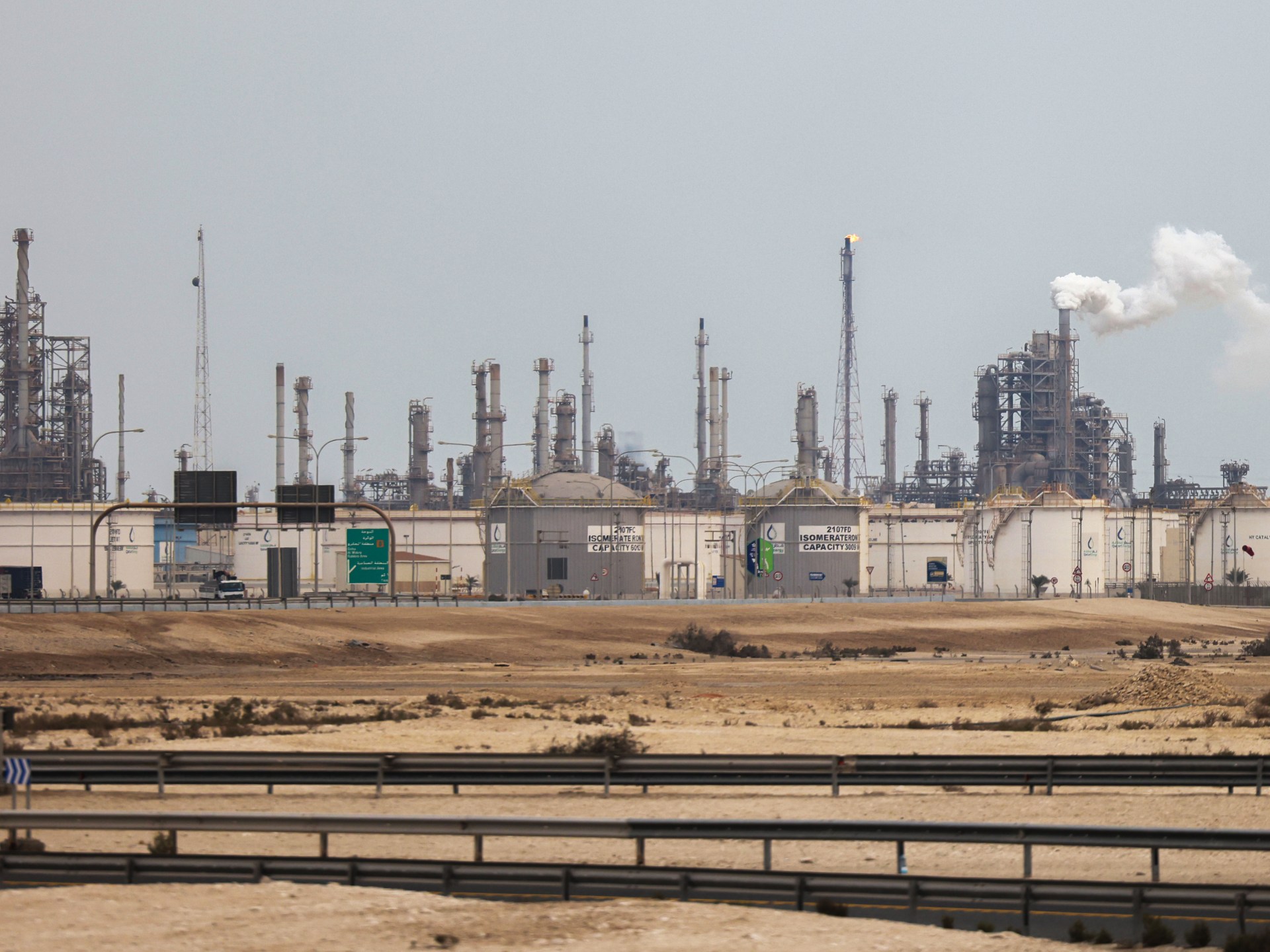
Qatar’s state-run energy firm and the world’s largest producer of liquefied natural gas (LNG), QatarEnergy, announced on March 2 that it had halted LNG production following Iranian attacks on its operational facilities in Ras Laffan and Mesaieed in Qatar.
Saudi Arabia shut down operations at the Ras Tanura plant, its biggest domestic oil refinery operated by Saudi Aramco, after a fire broke out at the facility that officials said was caused by debris from the interception of two Iranian drones.
Iranian officials publicly denied targeting QatarEnergy and Aramco.
Last week, Iranian state media reported that natural gas facilities associated with the South Pars gasfield had been attacked.
Hours later, Iranian missiles struck an LNG facility at Ras Laffan Industrial City, which processes approximately 20 percent of the global supplies of LNG, in northern Qatar.
The attack caused three fires and wiped out about 17 percent of Qatar’s LNG export capacity, causing an estimated $20bn in lost annual revenue, QatarEnergy’s CEO, Saad Sherida Al-Kaabi, told Reuters.
Advertisement
Repairs will sideline 12.8 million tonnes of LNG production per year for three to five years, he said.
Iranian media also quoted Iranian military spokesman Ebrahim Zolfaqari as saying: “If Iran’s fuel and energy infrastructure is attacked by the enemy, all energy infrastructure, as well as information technology…and water desalination facilities, belonging to the US and the regime in the region will be targeted pursuant to previous warnings.”
Financial and corporate entities
Sunday’s X post from Ghalibaf did not specify which “financial entities” Iran would consider legitimate targets if the US were to strike power plants and other infrastructure in Iran. He did specify that any entities buying US Treasury bonds would be considered hostile.
While he did not mention the names of any prospective targets, one large organisation which reportedly holds $360bn of US Treasury bills – about 6 percent of the total – is Berkshire Hathaway, the US multinational conglomerate controlled by Warren Buffet, one of its key investors. It has invested in industrial, services and real estate assets in Israel and the wider region.
Large US “stablecoin” issuers such as Tether and Circle are also some of the biggest holders of US Treasuries. Tether is reported to be expanding in the Middle East, launching a stablecoin and providing finance for energy deals. Last year, Fortune reported that Tether owned around $100bn in US Treasuries. Circle has gained regulatory approval from the Abu Dhabi Global Market to operate as a financial services provider.
On March 11, the IRGC-affiliated Tasnim news agency released a list of offices and infrastructure run by US companies with Israeli links whose technology has been used for military applications, describing them as “Iran’s new targets” as well.
The list included Google, Microsoft, Palantir, IBM, Nvidia and Oracle, as well as the listed offices and infrastructure for cloud-based services located in multiple Israeli cities, as well as in some Gulf countries.
Other critical infrastructure
Last week, Iran’s foreign minister accused the US of striking a desalination plant on Qeshm Island off the coast of Iran in the Strait of Hormuz. The strike reportedly cut off the water supply to 30 villages.
The next day, Bahrain said an Iranian drone had caused material damage to one of its desalination plants near Muharraq.
None of the six Gulf states have any permanent rivers, which makes them the most water-scarce countries in the world. As a result, Bahrain, Kuwait, Oman, Qatar, Saudi Arabia and the United Arab Emirates rely on desalination to meet the needs of their combined populations, which exceed 62 million people.
Desalination plants produce 100 percent of the water consumed in Bahrain and Qatar. They provide more than 80 percent of the drinking water supply in the UAE, and 50 percent in Saudi Arabia.
Related News
Brazil’s jailed ex-president Bolsonaro hospitalised with lung infection
Israel kills 12 medics in attack in southern Lebanon as war ravages nation
Qatar rejects attempts to ‘drive wedge’ with US over gas pause