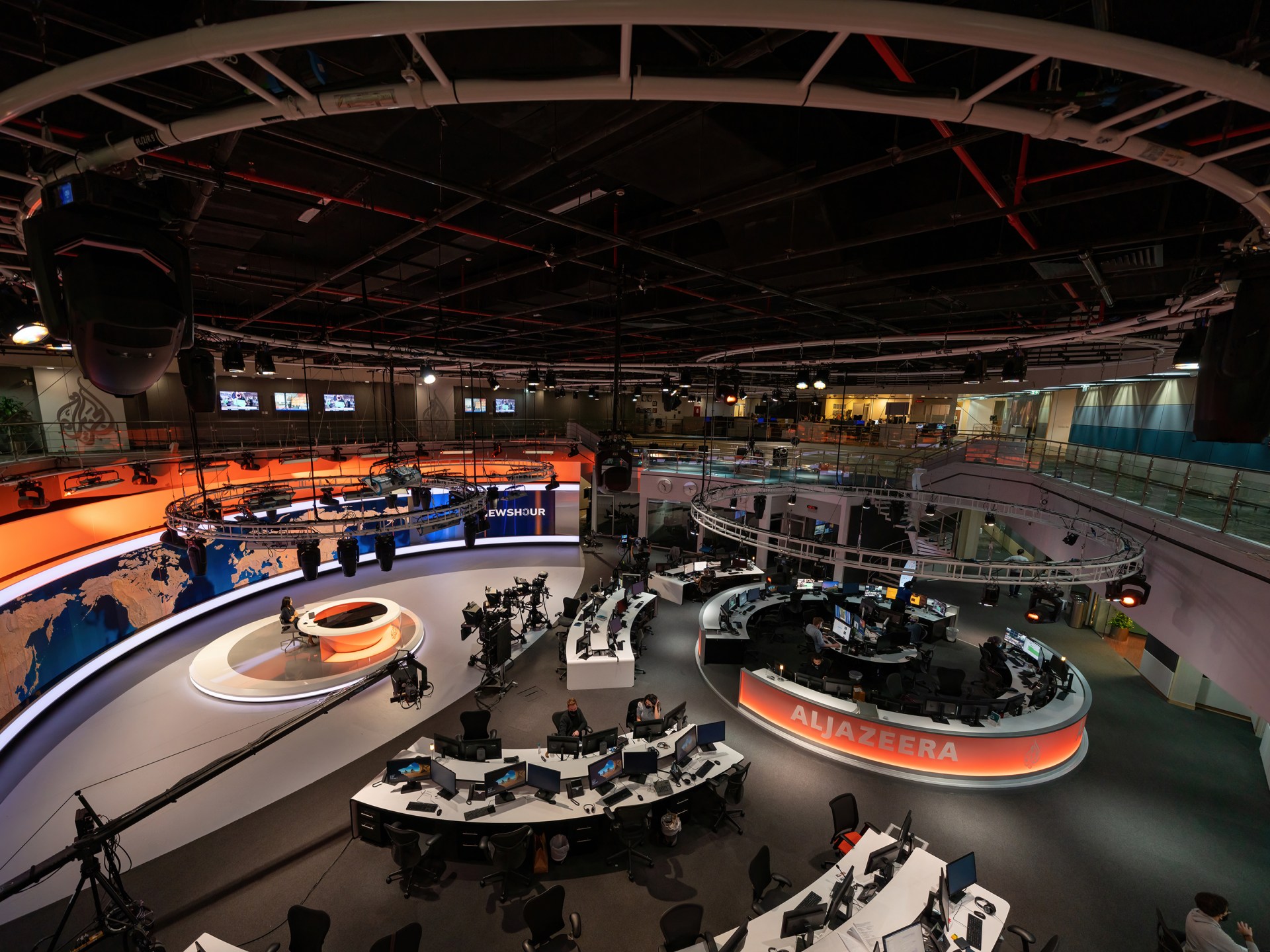

Al Jazeera English is marking 20 years since its official launch on November 15, 2006, about 10 years after Al Jazeera Arabic was inaugurated.
Since then, the channel and its digital footprint have grown dramatically in terms of content and coverage, becoming one of the most influential outlets in the world with employees from 78 nationalities and 48 bureaus around the world.
- list 1 of 4Al Jazeera celebrates 30th anniversary
- list 2 of 4Al Jazeera marks 30 years of transforming news in Arab world and beyond
- list 3 of 4Al Jazeera marks 30th anniversary with network overhaul
- list 4 of 4Al Jazeera condemns Israeli ban extension, calls for its immediate lifting
end of list
Here are some of the most significant developments we have covered over the years:
Gaza war of 2008
The war went on for 22 days. Israel’s widespread aerial bombing campaign on densely populated areas of the Palestinian enclave, including homes, police stations, schools, United Nations buildings and hospitals, was followed by a ground assault.
About 1,400 Palestinians and 13 Israelis were killed in the war that led to a blockade being imposed on the Gaza Strip.
In the years that followed, attempts by activists to break that siege were met with a brutal response from Israel. The deadliest of those Israeli attacks was on the Mavi Marmara, a ship that was part of the Gaza Freedom Flotilla, a convoy carrying more than 700 activists and 10,000 tonnes of humanitarian aid. Israeli soldiers boarded the vessel early in the morning on May 31, 2010, firing at the civilian passengers. Ten Turkish nationals were killed, and the attack set off a major diplomatic spat between Israel and Turkiye.

Arab Spring
The series of pro-democracy and antigovernment protests, some of which led to armed rebellions after authorities brutally cracked down on them, started in December 2010 in Tunisia.
Advertisement
They swept across the Middle East and North Africa in the early 2010s, leading to multiple revolutions and shifts in power in Tunisia and Egypt, and prolonged conflicts in Syria, Libya and Yemen.
Many other countries introduced national reforms in light of the public movements going on across the region.

Taliban’s return to power
The Taliban movement returned to power in Afghanistan in 2021 in line with an agreement between the armed group and the United States.
The administration of US President Donald Trump signed the deal with the Taliban in Doha, Qatar, in February 2020, which set a timeline for the complete withdrawal of US troops and allied armies from Afghanistan.
As US troops withdrew, the Taliban continued to take control of the country. In August 2021, Taliban fighters entered the capital, Kabul, unopposed after President Ashraf Ghani fled the country.

Russia’s war on Ukraine
In February 2022, the Russian army launched a full-scale invasion of Ukraine in a move widely perceived as unprovoked.
The attack, dubbed the “special military operation” by Moscow, resulted in widespread condemnation from the international community and started a brutal war, which is still ongoing.
Large chunks of eastern Ukraine – as well as the Crimean Peninsula, officially annexed by Moscow in 2014 – remain under Russian control today, with clashes and intense mutual aerial attacks on each other’s territory ongoing.

FIFA World Cup 2022
Qatar hosted the football World Cup in 2022, the first in the Middle East and Arab world. Due to summer heat in the Gulf, it was the first World Cup held in late autumn and winter.
Argentina won the championship, defeating France in the final.

Israel’s genocidal war on Gaza
Israel launched its genocide against Palestinians in Gaza on October 7, 2023, and it is ongoing even today despite a so-called “ceasefire” agreed in October 2025.
The inhumane war started after Hamas’s armed wing, the Qassam Brigades, and other Palestinian groups attacked southern Israel, killing 1,139 people and taking about 240 others captive.
Advertisement
Since then, the enclave has been almost destroyed, and more than 74,600 people have been killed, according to local authorities.

US-Israel war on Iran
The US and Israel launched strikes against Iran this February and started a war that killed many high-ranking Iranian officials, including the country’s supreme leader at the time, Ayatollah Ali Khamenei.
Since then, the sides have exchanged attacks numerous times, with the US forces hitting Iranian territory and Tehran targeting what it says are US assets in the region.
The conflict led Iran to effectively block navigation through the Strait of Hormuz, a key waterway for hydrocarbon deliveries from the Gulf to the rest of the world, by attacking vessels passing through it.
The US, in response, imposed a naval blockade on Iranian ports aimed at crippling the country’s economy.
The process to reach a deal between the sides continues under the mediation of Qatar and Pakistan.

Related News
Kenya discharges last Ebola patient, awaits disease-free status
UN demands investigation after staffer’s death in Houthi custody in Yemen
Talarico wins Texas Senate race, ending decades of Republican dominance