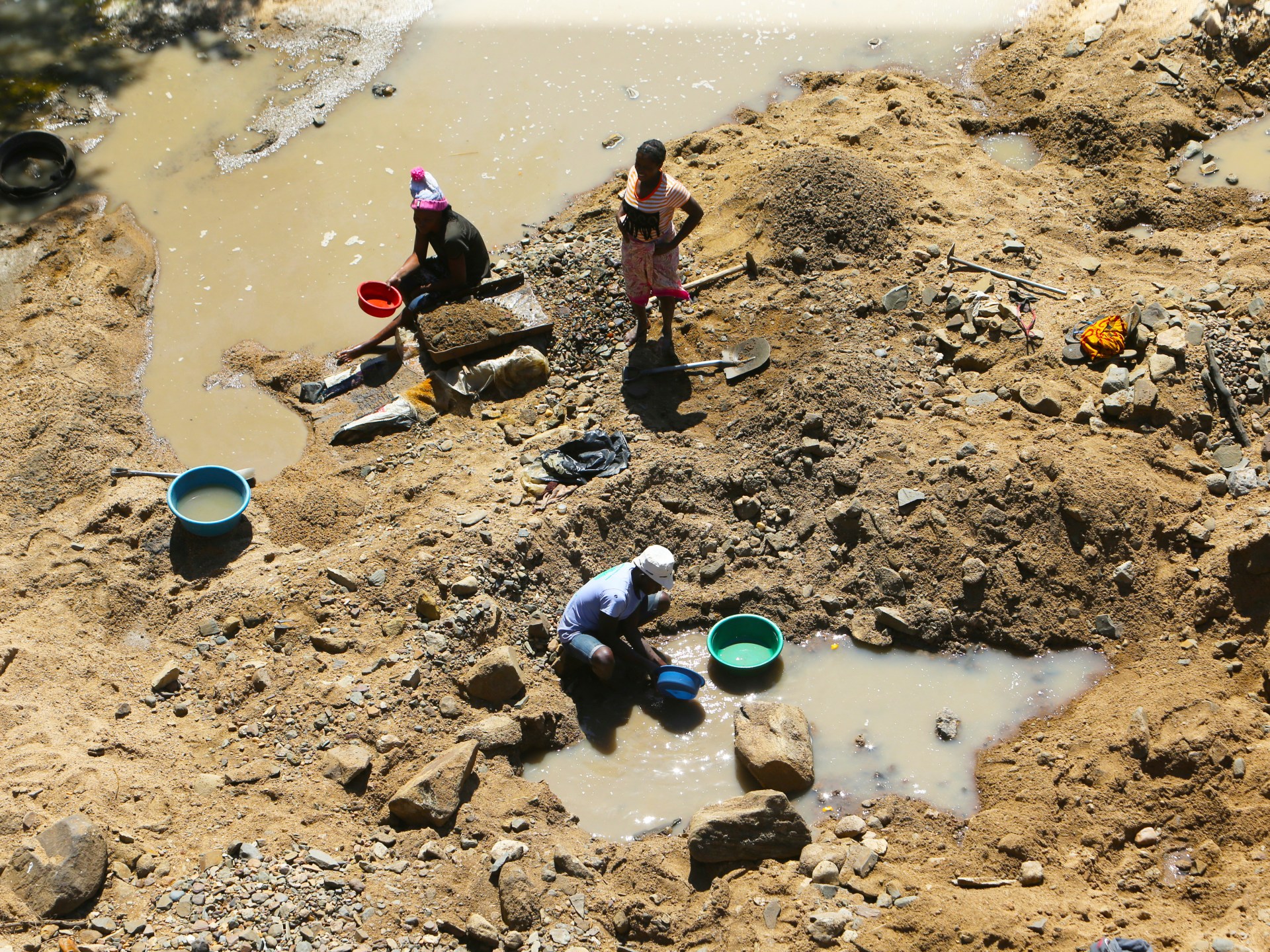

Lusaka, Zambia – Zambia is attracting billions of dollars in mining investment as it seeks to become a significant supplier of minerals critical to the global energy transition. But as foreign companies expand operations and new projects come on stream, questions are mounting over whether common Zambians are benefitting from the country’s growing mineral wealth.
President Hakainde Hichilema said more than $12bn had been invested in Zambia’s mining sector since 2022, as the government pushes to increase copper production and attract new investors.
Leading investors include Canadian companies First Quantum Minerals and Barrick Mining Corporation, India’s Vedanta Resources and China Nonferrous Metal Mining Group (CNMC).
Abu Dhabi-based International Resources Holding (IRH) has also emerged as a leading investor after committing $1.1bn to recapitalise Mopani Copper Mines, previously owned by Glencore. The investment gave IRH a 51 percent stake in the mine, with state-owned ZCCM Investments Holdings retaining 49 percent.
Alongside large-scale mining projects, the Copperbelt province has also seen the expansion of smaller Chinese-owned mineral-processing plants, some sourcing ore from artisanal and small-scale miners. Their growth has raised concerns about safety standards, regulatory oversight and environmental protection.
The government has sought to restore investor confidence through tax incentives and a more predictable fiscal framework, following years of frequent changes to mining tax policies under the former Patriotic Front government, which ruled Zambia between 2011 and 2021.
Advertisement
Unlocking mineral wealth and adding value
To accelerate mineral exploration, Zambia is undertaking a nationwide high-resolution aerial geophysical survey aimed at improving geological information and identifying previously unexplored mineral deposits. The survey is now about 98 percent complete, according to the Ministry of Mines and Minerals Development.
The government has set an ambitious target of increasing annual copper production to 3 million tonnes by 2031, from less than 1 million tonnes in recent years.
“We can do with our copper, cobalt, nickel, lithium, manganese and rare earth metals, which we now know we have in this country for our people, what the UAE has done with oil and gas for its people and their economy,” Hichilema told delegates at the Zambia Mining and Investment Forum in Lusaka on October 19.
Beyond increasing production, Zambia is also seeking to expand value addition to copper, a key material in electric vehicles and renewable energy infrastructure.
Historically, the country has exported copper cathodes to China and other industrialised countries. But the government wants Zambia to play a more active role in the global transition to a low-carbon economy by developing domestic mineral processing and manufacturing capacity.
Africa’s two leading copper producers, the Democratic Republic of the Congo (DRC) and Zambia, are also exploring a partnership with South Africa to develop an electric vehicle battery manufacturing industry.
“DRC and ourselves are doing something on EV materials so we can build a joint venture with South Africa, which is ahead of us in the motor industry, so that the motor vehicles produced out of South African production lines have Congolese and Zambian inputs of the EV battery,” Hichilema said.
The proposed partnership reflects growing efforts by African mineral producers to move beyond exporting raw materials and capture a greater share of the value generated by the global energy transition.
However, turning these ambitions into reality will require more than increased mineral production. It will also depend on the development of local industries, skilled labour and infrastructure capable of supporting large-scale manufacturing.
While foreign capital is driving an expansion of Zambia’s mining sector, trade unions say local workers are yet to see meaningful improvements in their working conditions.
“Inasmuch as the copper prices are going up and we have seen an increase in the amount of investments, we are experiencing same employment conditions – things are not any better for a mineworker,” Stephen Mwaanga, secretary of the National Union of Miners and Allied Workers, told Al Jazeera.
Advertisement
Despite higher copper prices, Mwaanga said, mining companies were also grappling with elevated production costs, including higher fuel prices, which he linked to the US-Israel war on Iran, affecting traffic via the Strait of Hormuz.
The wider Southern African region has also faced drought conditions associated with El Nino, putting additional pressure on electricity supplies. Zambia’s heavy reliance on hydropower makes the mining industry particularly vulnerable to reduced water levels, forcing the country to seek electricity imports and alternative sources of power.
Reliable electricity supplies are critical to sustaining the expansion of an industry that is central to Zambia’s economy.
“We need to strike a balance between improving the workers’ conditions of service and the challenges that these mining companies are facing,” Mwaanga said.
The challenge for the government is therefore not simply to attract more mining capital, but to ensure that increased production translates into better employment conditions and wider economic opportunities for Zambians.
Environmental costs of mining expansion
Beyond workers’ welfare, the rapid expansion of mining is raising concerns about its environmental consequences, particularly in communities already affected by pollution.
Eugene Mulenga, a human rights defender, fears the government’s drive to increase mineral production could place enormous pressure on the environment.
In February 2025, a structural failure at a tailings dam operated by Chinese-owned Sino-Metals Leach Zambia in Copperbelt released acidic, metal-laden mining waste into the Chambishi Stream. The pollution spread downstream into the Mwambashi and Kafue river systems, raising serious concerns about water quality, aquatic life and the livelihoods of communities dependent on the waterways.
A subsequent environmental assessment by the Zambia Environmental Management Agency documented the extent of the ecological damage and the effects of the discharge on affected waterways.
The incident exposed the environmental risks associated with mining expansion and renewed questions about the ability of regulatory authorities to monitor operations and enforce environmental standards.
Other pollution incidents have also been reported at mining operations, adding to concerns about the industry’s environmental footprint.
Zambia’s push to increase copper production to 3 million tonnes annually by 2031 has therefore intensified calls for stronger environmental safeguards and greater accountability from mining companies.
For common Zambians and local businesses, the benefits of the country’s growing mining investments also remain a subject of debate.
In an effort to ensure more mining-related spending circulates within the domestic economy, the government introduced local-content regulations, which require mining companies to allocate at least 20 percent of their annual procurement budgets for core mining goods and services to local suppliers in 2026. The threshold is scheduled to rise to 25 percent after one year, with further increases planned.
Advertisement
The policy is intended to strengthen indigenous businesses, create opportunities for Zambian suppliers and ensure a greater share of economic benefits from mining remains within the country.
But as Zambia positions itself to become a key supplier of minerals critical to the global energy transition, the question remains whether the investment boom will deliver meaningful improvements in citizens’ lives, particularly those living and working in mining communities.
For Mulenga, the economic ambitions must not come at the expense of communities whose livelihoods depend on the environment.
“What we have discovered is that most farmers and poor people who depend directly on these water bodies near the mining sites are being affected by the increasing mining activity,” he told Al Jazeera.
Related News

Judge rules Trump’s $10bn BBC defamation suit can proceed

Why more investment is not making housing affordable in Ghana

Romania says Russia-run sabotage network set fire near weapons factory