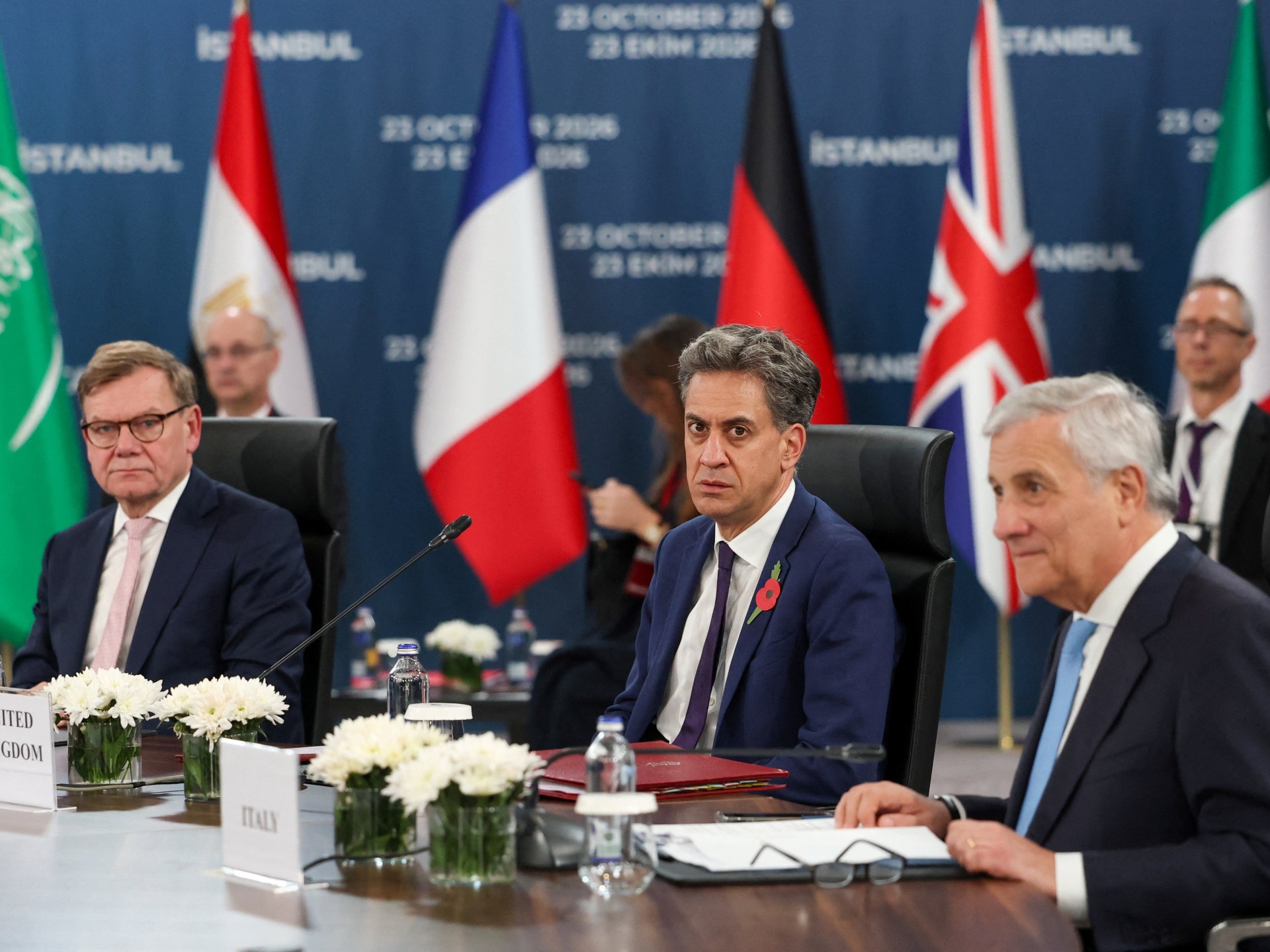

Foreign ministers from eight countries are cautioning the United States against further attacks on Iran after meeting in Turkiye to discuss the Strait of Hormuz and other regional developments.
Ministers from the United Kingdom, France and Germany, known as the E3, convened with counterparts from the R4 group of Turkiye, Saudi Arabia, Pakistan and Egypt on Friday, along with Italy.
- list 1 of 4Iran says seven ships hit in Hormuz Strait, warns US of wider response
- list 2 of 4Are global oil reserves sufficient to withstand renewed US-Iran war?
- list 3 of 4‘Life will not be easy for Europe this year,’ IEA chief warns
- list 4 of 4US-Iran war, then and now: How the landscape has changed since February
end of list
Speaking after the meeting in Istanbul, Turkish Foreign Minister Hakan Fidan said that none of the countries participating in the meeting approved of another military intervention or attack on Iran.
Such a move would only exacerbate tensions and further expand the conflict, he said, adding that diplomacy and dialogue were the only way to end the war.
A further escalation between Iran and the US “would create nothing but losers and would undoubtedly have very serious consequences for hydrocarbon prices,” French Foreign Minister Jean-Noel Barrot told reporters.
“And so the first thing this group of eight countries … will do is call on both sides to exercise the utmost restraint, because we cannot afford another escalation in the region,” he added.
Italy’s Antonio Tajani said the aim was to work for “de-escalation to guarantee freedom of navigation.”
“I do not believe the problem can be solved from a purely military standpoint,” he said, noting that “we must promote dialogue” in order to reopen Hormuz.
The group also discussed Israel’s genocidal war on Gaza, escalating fighting in Yemen and prospects for ending the Russia-Ukraine war.
Reporting from Istanbul, Al Jazeera’s Sinem Koseoglu said the summit was a “first-of-its-kind” attempt to discuss the parameters of regional conflicts and possible solutions.
Advertisement
Although participating countries “all have different national interests, especially when it comes to the crisis in the Gulf”, the Turkish foreign minister “underlined that what is happening in the Gulf … is affecting the other parts of the world”, Koseoglu added.
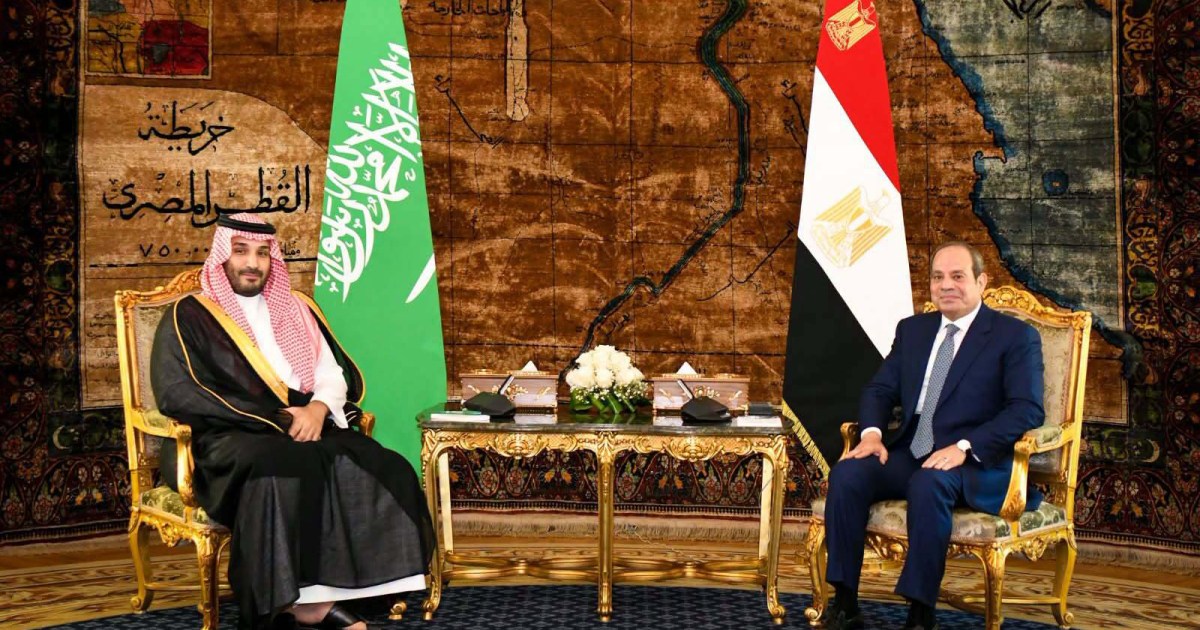
The meeting at an Istanbul hotel came as Turkiye seeks to bolster its role in the region, including through the Mecca Joint Defence Agreement, the trilateral pact launched with Pakistan and Saudi Arabia in August.
Turkiye has said that the pact is not aimed at any specific country and remains open to others joining, including Egypt.
Fidan told reporters the pact has “several advantages, particularly because it is informal and flexible and focuses specifically on the issues we face.”
“We are not aware of any other platform that brings together countries with such different geographical and political backgrounds,” he said, noting that Ankara “is well placed to play a constructive role in this process”.
Cairo has yet to decide whether to join the agreement. President Abdel Fattah el-Sisi recently said that Egypt would “carry out any measure to protect” Saudi Arabia.
The Iran-backed Houthis are fighting Yemen’s Saudi-backed internationally recognised government forces and have launched a series of deadly attacks on Saudi Arabia.
Related News
Trump administration ‘must be changed’: Iran’s IRGC appeals to US voters
UN General Assembly live: Leaders from Lebanon, Iraq, Pakistan to speak
Eritrea urges UN to intervene in standoff with Ethiopia