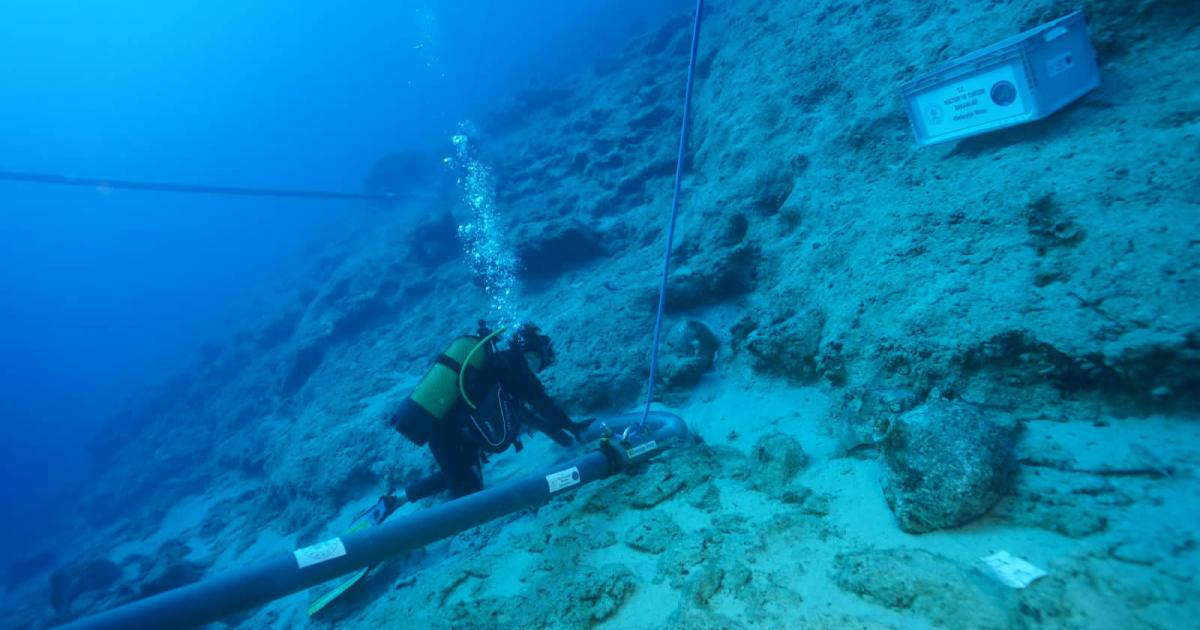

Turkiye’s Culture Minister Mehmet Nuri Ersoy has said the country unearthed ancient treasures from what he called “the world’s oldest shipwreck”.
Underwater excavations near Kekova Island in the southern Antalya province uncovered ceramic storage jars dating back 4,700 years to the Early Bronze Age, Ersoy announced in a post on X on Wednesday.
- list 1 of 4Egyptologists uncover ‘lost golden city’ buried under the sands
- list 2 of 4Mud mosque dating back to the Umayyad era discovered in Iraq
- list 3 of 4Twenty years after the US invasion, where are Iraq’s antiquities?
- list 4 of 4Spanish police seize ancient jewelry worth $64m taken from Ukraine
end of list
While the vessel’s wooden hull did not survive, archaeologists recovered the ancient storage jars following an underwater excavation project launched earlier this year.
The jars, believed to have transported olive oil or wine, provide concrete evidence of early maritime trade and cultural exchange across the eastern Mediterranean, according to the ministry.

Clay analysis indicated the containers were manufactured in workshops in the Jordan Valley, matching similar styles previously found in Egypt, Turkiye, and Greece that illustrate extensive Bronze Age sea routes.
One vessel was singled out for its unique design, featuring nine markings and two holes in its body that suggest it may have been used to churn butter or cheese.
Researchers believe the ship was sailing from the Levantine coast towards modern-day Hisarlik in Turkiye or the island of Crete in Greece when it capsized and sank.
The excavation was directed by Hakan Oniz, an associate professor of archaeology at Akdeniz University.
Advertisement
Speaking to the BBC, the professor said when his team first found the wreck four years ago, the jars only appeared to be a century or two old.
“However, we later became excited when we saw the same amphora forms in a publication on Egyptian archaeology and returned to the site,” he said. “Indeed, they were similar to those found at the Giza pyramids in Egypt. We were incredibly excited.”
The discovery has “shed light on the deep-rooted history of maritime trade along the Anatolian coasts,” added Ersoy.
Related News

China vs US: Who is winning the AI race, in four charts

‘Trauma still there’: A decades-old standoff returns to Northern Ireland

Christa Pike case underscores prevalence of botched executions in US