
United States President Donald Trump has said he will not unfreeze billions of dollars in Iranian assets prior to a lasting ceasefire agreement being reached to formally end the US-Israel war with Iran.
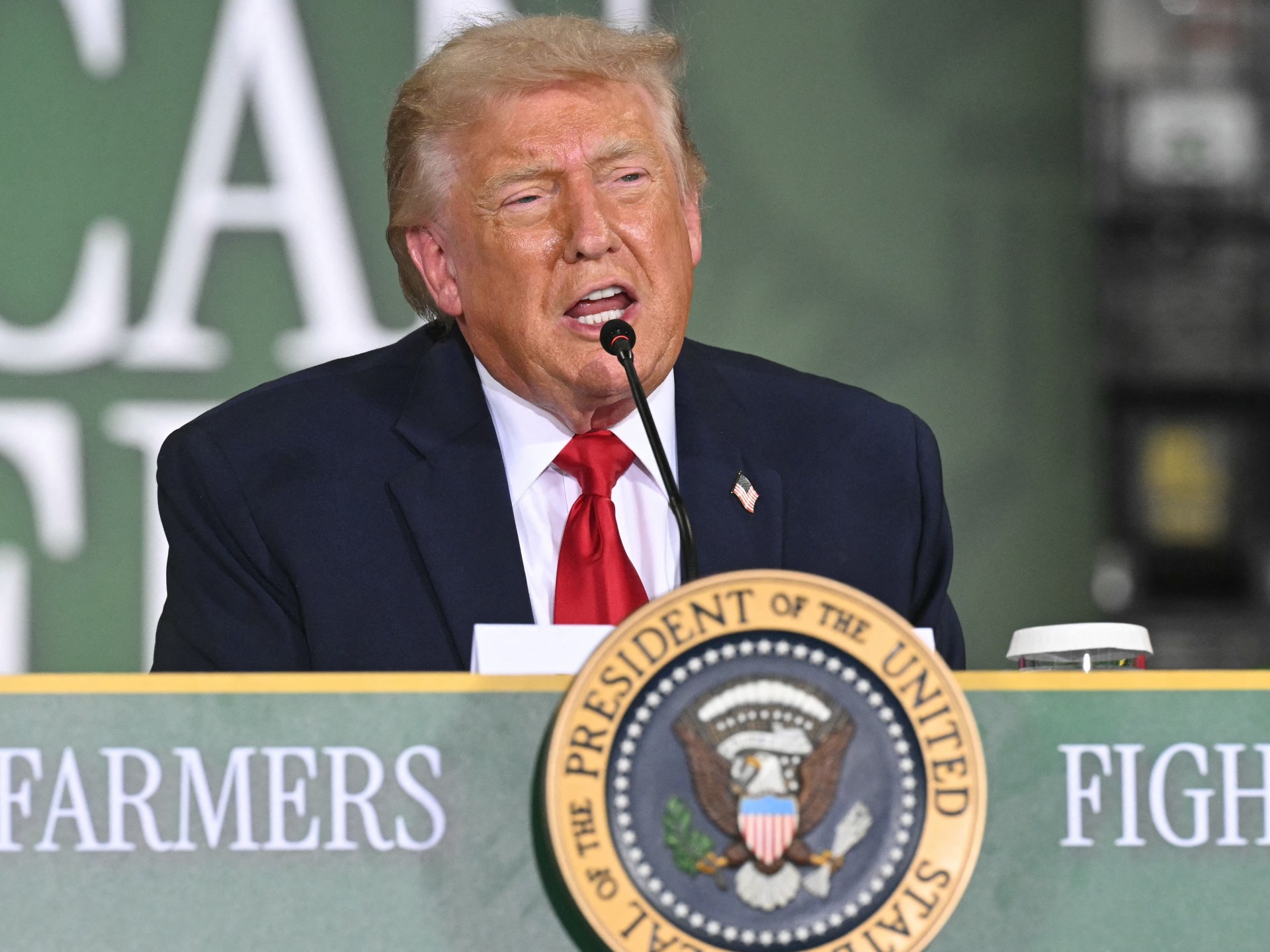
Trump made the statement in an interview on the NBC News programme Meet the Press that aired on Sunday, indicating little room in the entrenched standoff over the frozen funds.
- list 1 of 3Iran criticises US refusal to grant visas for World Cup delegation
- list 2 of 3Photos: 100 days of the US-Israel war on Iran
- list 3 of 3How have countries around the world responded to the US-Israel war on Iran?
end of list
The US president said any unfreezing of Iranian assets “comes after” a deal is reached.
“If they behave, if they do a good job, we start talking,” he said.
Iranian officials have repeatedly indicated that any deal could be contingent on the at least partial unfreezing of Tehran’s frozen assets, citing widespread mistrust of US negotiations.
The US twice launched military operations against Iran amid ongoing talks on its nuclear programme, a fact many analysts say has made Iranian officials wary in the ongoing ceasefire talks.
Trump has for weeks said a possible breakthrough was within reach, although there has been little sign of major shifts on key issues, including future control of the Strait of Hormuz, Iran’s nuclear programme, and the frozen assets.
Amid the diplomatic flurries, Trump has repeatedly threatened Iran with renewed strikes. He continued the approach in the interview with NBC, which was filmed in a barn during a trip the president made to Wisconsin on Friday.
“We’re very close to a deal, or I’m going to blow the hell out of them,” Trump said.
Speaking to CNN on Saturday, Mohsen Rezaee, a military adviser to Iran’s Supreme Leader Ayatollah Mojtaba Khamenei, gave a different account, saying “negotiations are at a deadlock”.
Advertisement
He called on Trump to break the impasse.
Iran is believed to have more than $100bn frozen in bank accounts across the world due to sanctions by the US and other countries.
Iran was meant to receive at least gradual access to those assets under the 2015 Iran nuclear deal, which saw Tehran curtail its nuclear programme in exchange for sanctions release. Trump unilaterally withdrew from the agreement in 2018.
Iranian state media has reported that Iran is now seeking between $12bn and $24bn in frozen funds as part of a ceasefire deal, pushing for a plan that would see half of the funds released upon the signing of an agreement and the other half released at a later stage.
Rezaee described the release as a “test of trust”.
In his interview with NBC, Trump said that he would be willing to speak with Khamenei, who succeeded his father, Ali Khamenei, after he was killed shortly after the US and Israel began launching strikes on Iran on February 28.
Fighting has been largely paused since April 8, although both sides have periodically exchanged strikes.
“I don’t want to say whether or not I know where he is, but there’s a good probability that I do,” Trump said of Khamenei, who has not been seen in public since being wounded in US strikes early in the conflict.
Trump also said that he was “not demanding” that Lebanon be part of a ceasefire deal.
Israel’s ongoing attacks against Hezbollah in Lebanon – strikes to which Iran objects – have continually threatened to derail negotiations.
Iran’s parliamentary speaker, Mohammad Bagher Ghalibaf, warned on Sunday that Iran could retaliate in response to Israeli strikes on southern Beirut and the ongoing US naval blockade of Iranian ports
Related News
Sanctions fears as Krygyzstan shutters companies suspected of aiding Russia
‘Arbitrary measures’: Lula slams US ‘terror’ designation for Brazil gangs
Iranian sources lay out Iran-US deal details