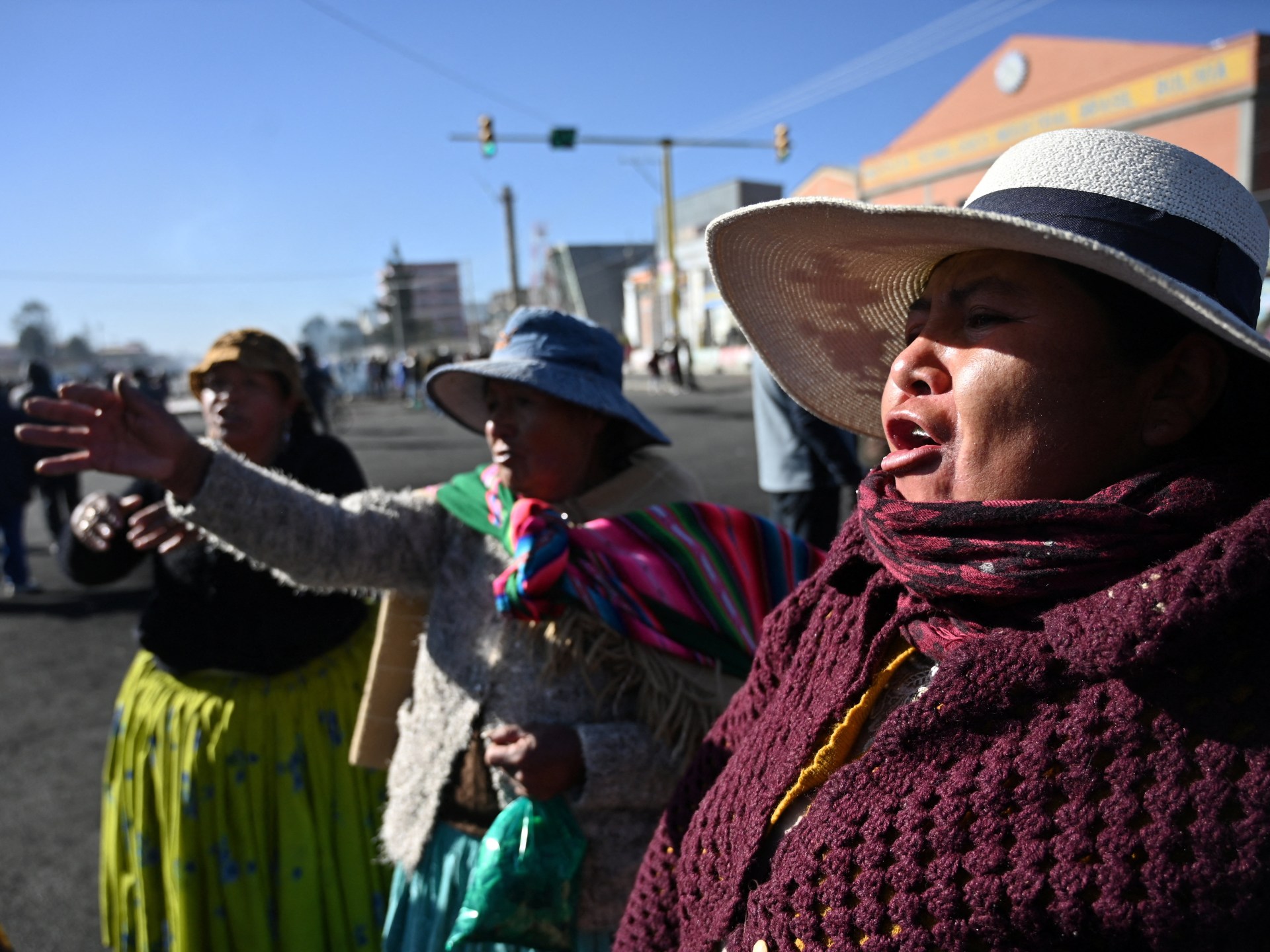

Military and law enforcement clashed with demonstrators outside La Paz, Bolivia, in an attempt to clear roadways that had been blocked as part of nationwide antigovernment protests.
As many as 3,500 soldiers and police were deployed as part of the operation that began in the early hours of Saturday. Around 57 people were arrested, according to the citizens’ rights ombudsman’s office.
Miners, schoolteachers, Indigenous groups and unions have helped to organise the protests, which aimed to convey outrage against the government of centre-right President Rodrigo Paz.
Bolivia is in the grips of an historic economic crisis, considered the worst the country has seen in decades.
The government’s foreign currency reserves have cratered, as exports from Bolivia have slowed down.
Key among those was natural gas. Vast reserves of the fuel were discovered in the late 20th century, and for nearly three decades, those natural gas deposits powered Bolivia’s economy, transforming the South American country into a major energy exporter.
But in 2022, the dynamic switched, amid mismanagement and dwindling supplies. Since then, Bolivia has had to import fuel from abroad, exacerbating its economic crisis.
Currently, many parts of the country have experienced long lines for fuel and shortages of basic supplies like food.
Paz, who was elected in October, had campaigned on alleviating the economic stress. But since taking office, he has spurred outrage by ending a two-decade-old fuel subsidy and pushing to privatise state-owned companies.
Advertisement
Earlier this month, the protests forced the repeal of a land reform measure, Law 1720, that critics claimed could be used to dispossess small, rural landowners, in favour of bigger holdings.
The Bolivian government has estimated that 22 roadblocks have been erected across the country in recent weeks.
Some of the protesters have demanded Paz’s resignation: His election in October marked the end of nearly two decades of rule by the Movement for Socialism (MAS).
But Paz’s office has blamed the demonstrations for cutting off key supplies to cities like La Paz, which holds the seat of government.
Food prices have increased since the blockades began, and the government claims three people have died after being unable to reach hospitals.
According to presidential spokesperson Jose Luis Galvez, Saturday’s crackdown on the protesters was designed to create a “humanitarian corridor” to ensure the free flow of supplies to hospitals in La Paz.
Earlier this week, Paz also thanked his Argentinian counterpart, Javier Milei, for delivering humanitarian assistance to Bolivia.
“This gesture of solidarity not only strengthens the historic bonds of brotherhood between our nations, but also represents vital relief for our communities in times of great need,” Paz wrote on social media on Friday.
Milei responded by denouncing the protesters as anti-democratic.
“Argentina stands with the Bolivian people and supports their democratically elected authorities against those who seek to destabilise the country and obstruct the path toward freedom and progress,” the Argentinian president said.
Related News
Syria says it dismantled Hezbollah-linked cell plotting assassinations
Why has the US sanctioned Iraq’s deputy oil minister for helping Iran?
Trump and Xi move towards business-first relationship after Beijing summit